stripping varnish/shellac off of Savage 99 stock

Newb99

Member
Joined
May 3, 2026
Messages
16
Good morning,
I would like to remove the varnish (not the stain underneath) off of my new to me 1966 vintage 99. I have looked at how to do videos and see that citristrip followed by mineral spirits, or just denatured alcohol with a lot of elbow grease does the trick. I'd appreciate any suggestions from those who have done this?
Thanks and stay safe all
 
I've used citristrip but that was to remove the old stain on the wood furniture of a G3/CETME, to then sand and repair and then re-stain and re-seal. If all you're trying to remove is the surface varnish, but leave the stain below alone, that may not be the best path forward.
 
Citristrip is good but if it's just top coat you're stripping, you may need something else.
 
Thanks for sharing your experiences. I'd like to keep it all original, but whatever was used to protect the stained wood has worn away in some spots. Also, after sixty years or so the stock isn't in the best of shape and will need a little TLC. That's why I'm asking about just removing the top coat so I can apply a fresh coat of tru-oil or something similar. Guess I'm just barking at the moon.
 
I like Lin-Speed oil. Sometimes a judicious rubbing with a scrap of t-shirt will revive a finish. If it’s peeling, I prefer careful use of synthetic steel wool. Or a bit of scraping and picking if it readily comes off. If you are careful, you may be able to remove the surface finish or feather the edges without removing stain. But I would plan on some stain work as well.
 
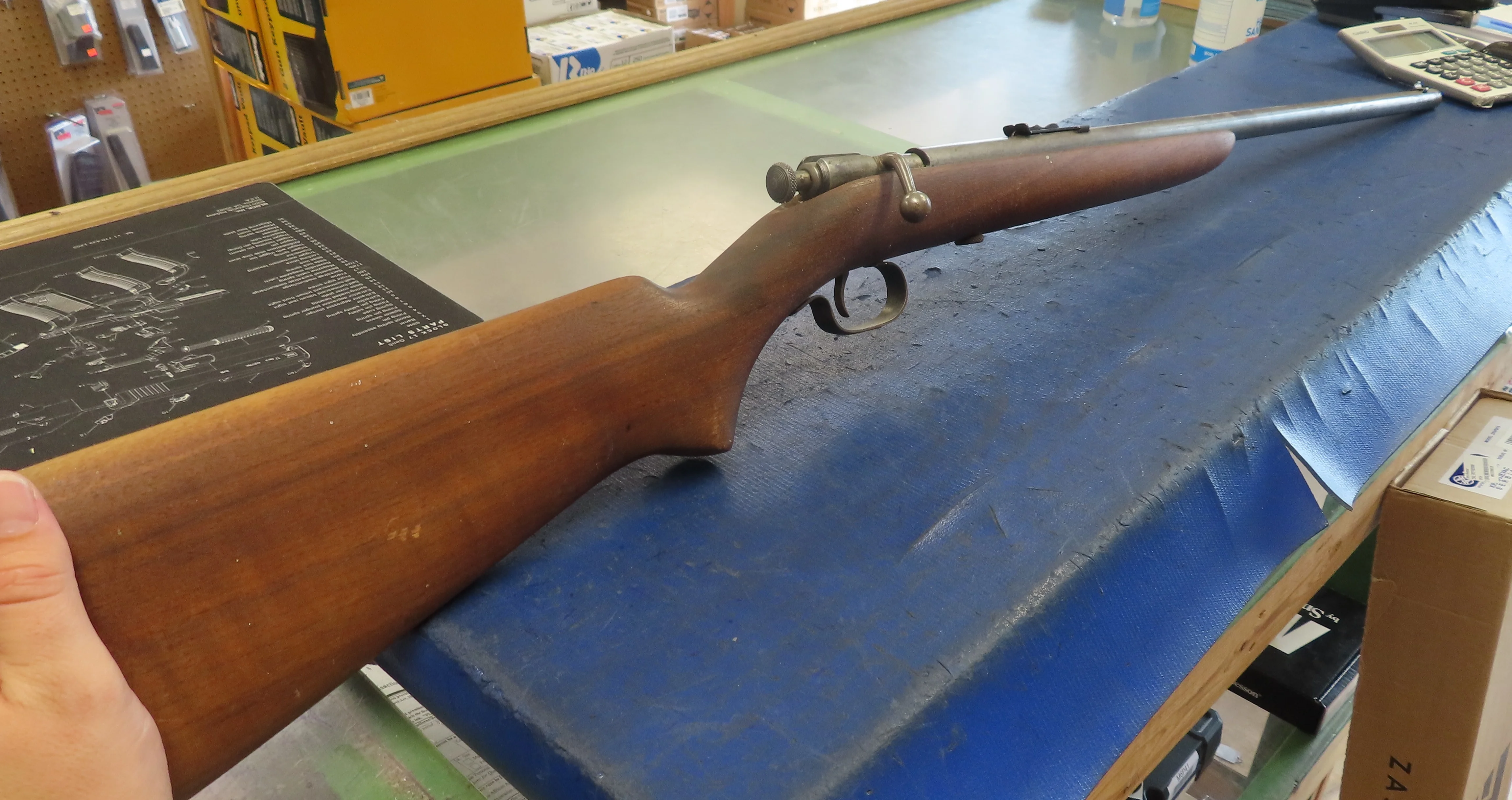
Here is a Winchester 60 i restored. Before and after pics.
1778548345775.webp

1778548366637.webp
 
Frontiersman, lin speed sounds interesting as opposed to doing multiple layers of something like tru oil.
CoalcrackerAl, I checked out where Coal Twp. is located because of the name. My dad was born in Carbondale, lots of coal around that area.
 
Newb99, is your 99 a 60s 99e with the pressed checkering? It is possible the stain may be part of the finish rather than a separate treatment, and, if so, removing the finish will take the stain with it. I ran into this in the 80s when part of my 99 obsession involved recovering rifles that needed a little attention.
 
I agree Odin Road. I’m no expert with wood & it’s various finishes, stains & what not, but I’ve never known it possible to remove any kind of top coat, whether, Varnish, clear coat, shellac, etc., without pulling out at least most of the stain. Otherwise, it would seem to me, it would not be a very lasting surface finish. But I guess it does depend on how deep the stain is.
 
Good morning,
I would like to remove the varnish (not the stain underneath) off of my new to me 1966 vintage 99. I have looked at how to do videos and see that citristrip followed by mineral spirits, or just denatured alcohol with a lot of elbow grease does the trick. I'd appreciate any suggestions from those who have done this?
Thanks and stay safe all
Don't strip it. Take a small piece of sheet metal and create a burr on it and scrape it off. Works like a charm and won't raise the grain. Stripper adds more time and effort. Go to the YouTube channel ANVIL. Mark Novac is the premier guy for stock and any other firearm repair. He's the king of it all. None better. Great videos.
 
Odin and ONE-TEN, I was wondering the same thing about the stain and finish being done in one coat. Not sure about the 99CD I have from '66, but will try to research. I will check out ANVIL's videos as well. Thanks a lot everyone.
 
Odin and ONE-TEN, I was wondering the same thing about the stain and finish being done in one coat. Not sure about the 99CD I have from '66, but will try to research. I will check out ANVIL's videos as well. Thanks a lot everyone.
Anvil might not bring up what you're looking for as you'll also get a bunch of videos about old blacksmith anvils. Type Mark Novac in the YouTube search and his tutorials will come up. I do urge you to check his scraper method out before you think about using chemicals. It will scrape off shellac and old fashioned varnish very quickly and leave no residue in the wood fiber to later work against the new finish. While chemicals will strip varnish, it raises grain, adds more sanding and you'll never completely remove the stripper as it's chemical compounds soak into the wood fibers.
If it is a hunting rifle consider tung oil as a finish. Great stuff and weather proof.
 
Padded, happened to check out Anvil on you tube, that's a lot of anvils! Then went to Mark Novac, will have to search for the scrapping video later. Thanks
 
Let me know what you come up with.
Paddyd, found Mark's scraping video. Certainly a unique process. Looked up Lin Speed too, prices run about $10 for 2 oz while shipping is around $12. By the way, autocorrect "fixed" your sign in name in my previous post.
 
Paddyd, found Mark's scraping video. Certainly a unique process. Looked up Lin Speed too, prices run about $10 for 2 oz while shipping is around $12. By the way, autocorrect "fixed" your sign in name in my previous post.
Mark Novac is quite possibly the best all around gunsmith in the country. He tackles some seriously complex repairs on some very valuable antiques. I wish I was closer to his shop.
 
Just an FYI; around 1880, Devilbiss and Binks (separately) pioneered air,and airless spray systems that were a paradigm shift in the way not only furniture was being "finished".... but firearms as well.

(My opinion as a professional cabinet maker/finisher) It took about 5 minutes for the finishers of that period to figure out that "tinted" clears... lacquer more often than not...was the way of the future.

I know folks don't want to hear this,but it is what it is. Spraying tinted clears allows finishers to cheat sapwood inclusion. "Staining" as a DIY'er looks at it just isn't how it's done. Maybe on hardwood floors but furniture and gunstocks? Nope,takes WAY too long. Tint the clear,spray it on.

Don't confuse this with dunking military stocks in huge boiling vats of preservatives by the truckload. Different application,different product. So don't be shocked when you scrape/sand/strip a gunstock and see large areas of sapwood. Usually,on the lower part of the buttstocks.
 
Good afternoon all,
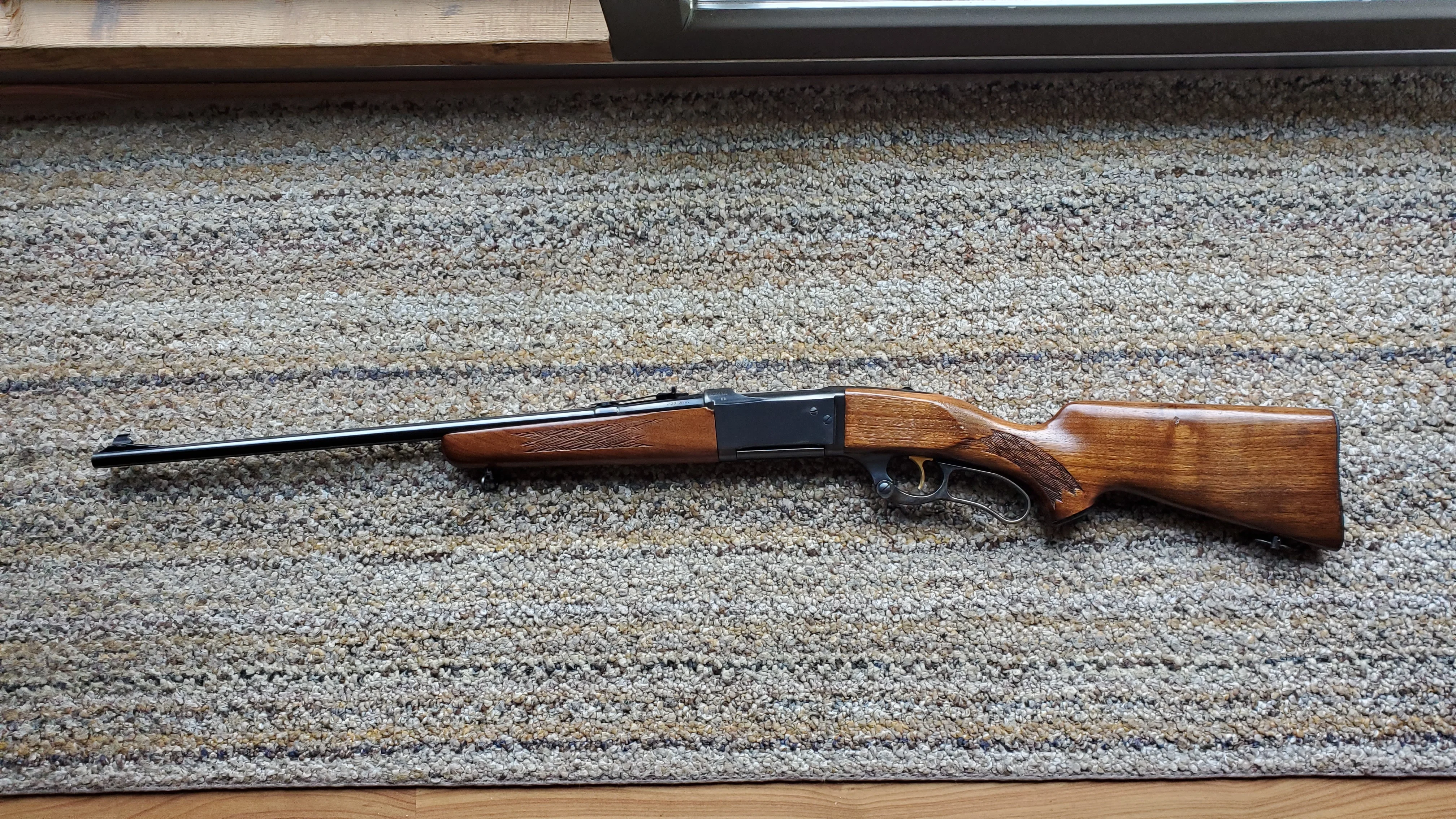
Since most of the finish looked worn off I just went with denatured alcohol and elbow grease. Steamed out most of the dents and sanded lightly. After that, I applied around 10 light coats of Tru Oil, light sanding between each coat. As you can see, I wasn't trying to do a perfect restoration, just preserve it better. Cleaned the insides and a little Lucas oil here and there before reassembling. I can't wait to run some rounds through it.
Thanks to all for your valued advice.
ps: any advice on factory ammo to try out in it?
 

Attachments

  • Savage 99CD.webp
    Savage 99CD.webp
    2.1 MB
Last edited:
That's a good looking piece! Glad it's worked out to your liking, hope it lasts.

It looks like it's just a 308 WIN, but the picture is a bit blurry.

Without knowing the actual twist rate, I'd at least say to try some of the lighter weight basic hunting stuff first, because SAAMI spec is 1:12 for 308 WIN, and an older rifle is more likely to stick to SAAMI than not as a baseline.

PPU has a 150gr SP, Federal Power-Shok has a 150gr SP, and Sellier & Bellot has a 150gr SP as well, and these are all on the less expensive side, being around $25-30/box of 20 rounds. None are marketed as target or match, but they'd all probably be a decent hunting round out to 300yds with the soft point, and while the brass wouldn't be premium, it could be reloaded easily as they all use boxer primers.

Heavier projectiles aren't necessarily "better", and some of the most accurate 30 caliber rifles within 300yds are using stuff all the way down in the 110-125gr range.
 
Chronoblip,
Thank you for the ammo info. Yep, it's a 308 WIN from 1966. I don't hunt and this is actually my first rifle, other than my Henry 22lr. I appreciate your suggestions since I'm pretty clueless to rifle cartridges.
 
Any factory 308 is fine. No need to spend the money for top of the line, target ammunition, unless you’re testing for groups accuracy. But for just shooting, use whatever FMJ ammo.
 
citristrip has worked well for me on many stock re-finishing projects. The trick to removing only the topcoat is timing. I would apply and take off immediately and repeat until what you are looking for shows up. Whatta hobby!
 
I considered buying either Lin speed or Citristrip among other items. Some have said that I'm cheap, I consider myself frugal. Since I wasn't trying for a complete refinish I used whatever I had on hand. My only purchases were Tru oil (the LGS was having a sale) and the gray pads. Taped up the checkering for all but the last two light coats and did the insides as well. Thanks again for the help given by all.
 

Latest posts

Back
Top