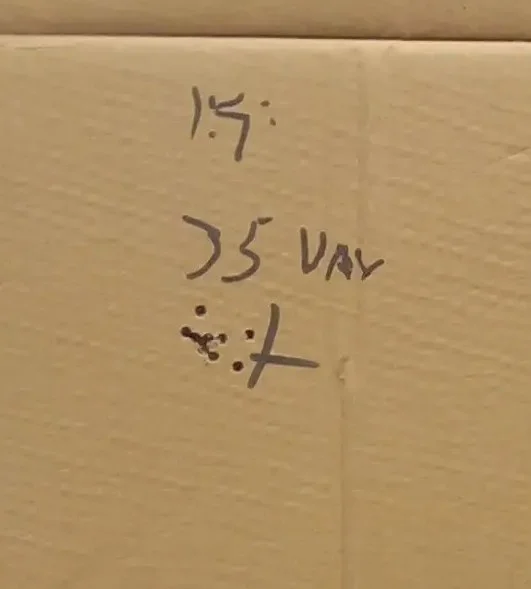
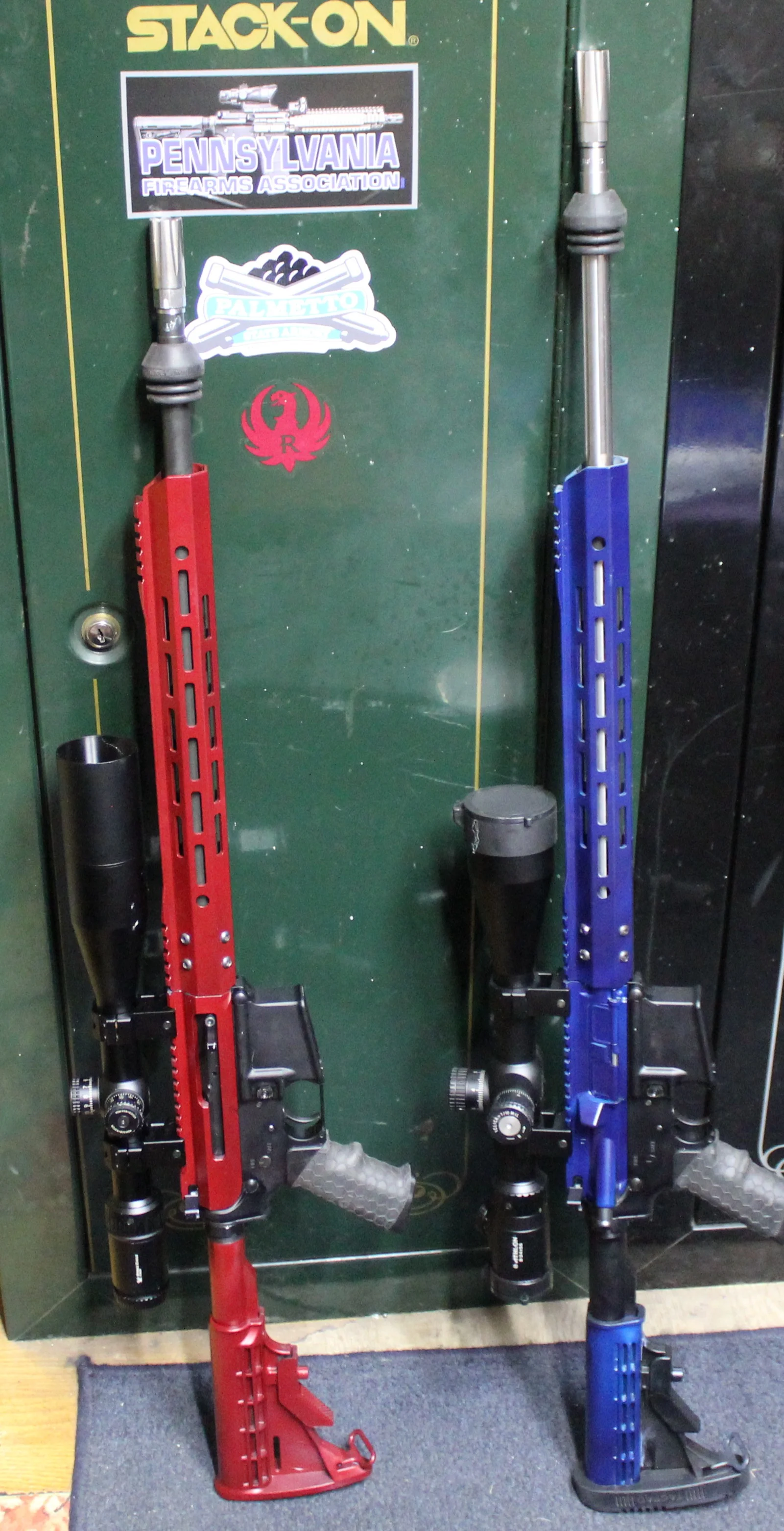
Started to load for my future rifle.

CoalCrackerAl

Well-known member
Bronze Member
Joined
Jan 4, 2026
Messages
479
City & State/Province
Coal TWP Pa.
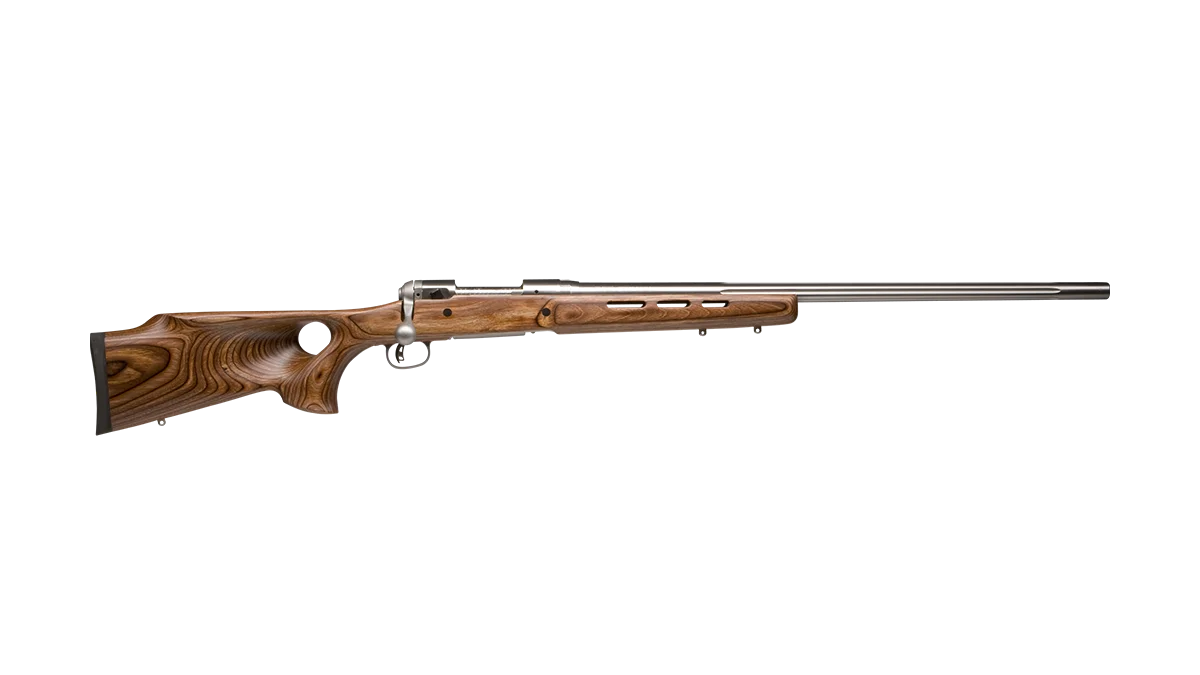
I been loading 22-250. So far i loaded 35,40,50,55 and 60 grain bullets. Im going to pick up some 45 grain then. 22-250 is a new to me cartridge. Im going to get a model 12 BTCSS .
1771125046463.webp
 
What is the twist.
I have two .22-250s.
One is a 1:14 twist and shoots up to 53 gr bullets very accurately. Accuracy drops off a bit with 55 grs though.
The other is a 1:12 twist and shoots 55 gr bullets the best. I haven't tried any 60s but that is on my agenda.
Both of mine seem to shoot better with powders normally used for 0.308s.
 
With both of my .22-250s, the light bullets that the slow twists will stabilize are so short, even the 55 Berger FB #22410, that you can't even think about jump.
The bullets fall out of the brass before they even touch the lands.
I have to load based upon the amount of bullet body in the neck to get a COAL that won't cause inconsistency with too little bullet body in the neck.
 
At the published OAL for a 50 gr Berger FB # 22406for example, 2.350 OAL would leave 0.268 inches of bullet body in the neck.
That is 119.4% of a full caliber of bullet body in the neck, and is very conservative.
A different manufacturer's bullet probably would be a bit different, but using the published OAL for any bullet will have then really seated back pretty far.
A lot of shooters choose to limit bullet body in the neck to 50% a caliber or 0.112. That would give you and OAL limit of 2.506.
You could calculate an OAL limit that fits your degree of risk for any bullet you choose.
I have experimented with a little as 31.25% of a caliber (0.070) and have found that there is rarely an issue with lack of neck tension, as long as the brass is properly sized.
At 1/4 caliber (0.056), you might have some issues trying to keep the seating depth consistent, especially if the brass has been through a lot of reloads.

If you need help with finding a limit, PM me.
 
I been loading to magazine length where possible lately. I find i get better results. The small 35 and 40 grain bullets. I did seat longer than the data. I put a bullet next to the loaded one. To see far it was seated. Im not so much a velocity chaser. I go for accuracy.
 
I, too, favor loading for accuracy rather than velocity.
I'm impressed you do to.

But my Savage .22-250 11 VT mag would handle OALs up to 3.015.
My plastic AICS mag for the Oryx chassis that I now use for the Savage .22-250 will handle 2.823. A metal mag would handle longer than that but I will never have to load out longer than 2.823 with light bullets in my 1:12 twist.
I'm not even sure Savage ever made a barrel with a faster twist than 1:12 for a .22-250.
Unless you are using an AR mag, you should have enough mag depth in a Savage mag to allow the light bullets to fall out of the neck if you needed to seat them out that far to improve accuracy.

I am always experimenting to see if i can get better accuracy.
Changing to the Oryx chassis, my .22-250 has improved accuracy by 38% with an overall average of 0.264, but my Savage stock was way too short for me and my long arms so it isn't a comparison of stocks as much as what fits the shooter..
My best results with OALs with loads in the Oryx stock so far:
55 Gr Berger FB #22410 loaded out at 2.358 at 3363 fps (0.226 for four 5-round groups - one group at 0.163 another at 0.191)
53 Hornady V-max #22265 loaded out at 2.396 at 3411 fps (0.248 for six 5-round groups - one group at 0.176 and another at 0.202).

My next experiment will be with 60 gr bullets to see if my 1:12 will stabilize them. If it will, then I will try the new Hornady 62 gr ELD-VT bullets to see if they will stabilize.

My 1:9 twist 0.223 Savage stabilized 77 grain SMKs and shot them better than any other bullet when Sierra said they needed a 1:8 twist. I measured the twist in the Savage factory barrel at 1:8.75. So I have some hope at least the 60s will be stable.
 
Back Home, Years Ago, at the LGS, there was a Savage bolt gun... a single-shot... in a laminated stock, in .22-250. MAN! ...I wanted that rifle! Your photo reminds me very much of it. Good luck when you get it, and let us know how you are progressing.
 
The last time i had my chronograph out. I clocked some 35 grain V-max in my 24 inch AR.
28 grains of H335 3862, 3873 and 3953. Was the results. Don't know why the one was at 3953. I shot them out of a 1:7 twist. Groups were not the best . 100 yards.
IMG_20250414_144055.webp
 
Well, that’s still cool. Howas are nice rifles. Several manufacturers make Prefit Barrels for those as well, which is pretty cool. I came close to building one instead of another Savage 110. But, my loyalty runs deep. ☺️
 
A 1:9 twist in a .22-250 barrel would be a God-send for someone interested in shooting for accuracy.
It would open up you bullet weight choices from 69 through 73 gr bullets, and if the twist was just a little faster than spec, maybe even 77s.
As I said in post # 9, my .223 with a fast 1:9 twist shot 77gr SMKs just great.
 
A 1:9 twist in a .22-250 barrel would be a God-send for someone interested in shooting for accuracy.
It would open up you bullet weight choices from 69 through 73 gr bullets, and if the twist was just a little faster than spec, maybe even 77s.
As I said in post # 9, my .223 with a fast 1:9 twist shot 77gr SMKs just great.
Or, even go 1:8 twist. Giving the ability to use the 80, 88 & even 90gr .224” bullets! Turn the 22cal into a 1000yd rifle!
 
I don't have a 22-250, however when loading for a new caliber or bullet weight for one of my existing calibers, I load them all long. While at the range, I shoot several fowling shots and then testing.

With my Garmin fired up and my Wilson seating die ready to go, the shooting begins. I shoot 3-5 rounds and make notes on the group and FPS. Then I seat the next rounds 5-10 thousands deeper. I want to see a change in the group. I continue this system until I get the group I'm looking for.

When I get the group I want at 100 yards, I use that same round at 200 yards and fine tune it. If it shoots great at 200 I'm good to go.

I too go for accuracy not FPS.
 
A 1:9 twist in a .22-250 barrel would be a God-send for someone interested in shooting for accuracy.
It would open up you bullet weight choices from 69 through 73 gr bullets, and if the twist was just a little faster than spec, maybe even 77s.
As I said in post # 9, my .223 with a fast 1:9 twist shot 77gr SMKs just great.
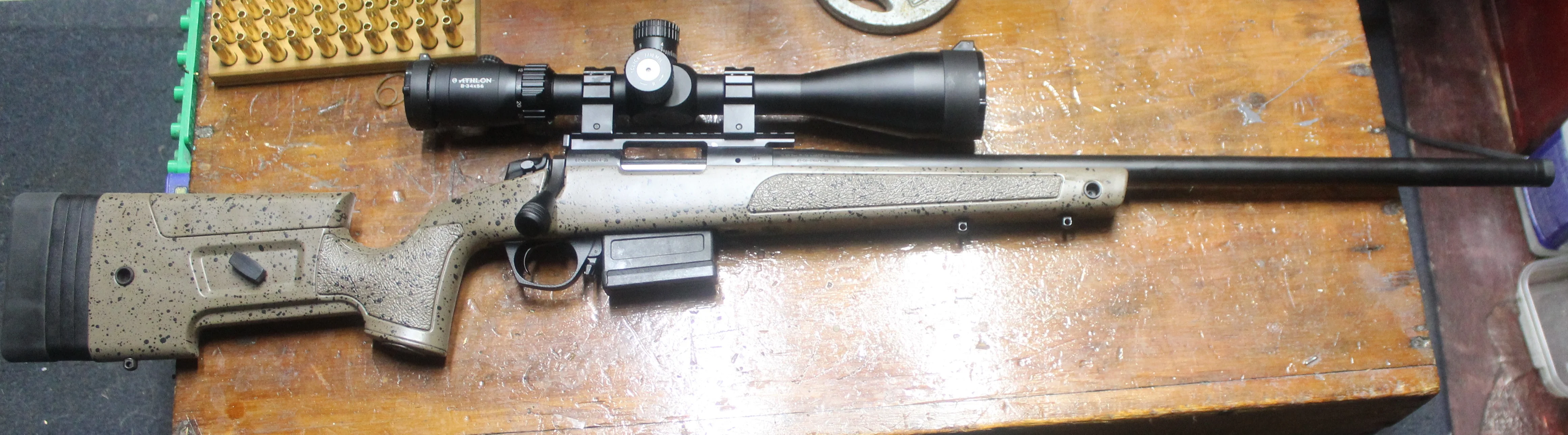
I have not had any luck shooting anything over 73gr bullets in my LRVP .223 1 in 9 twist. The 69&70gr bullets shoot into one tiny little hole. The 73gr makes it a little bigger. The 77gr bullets open it up to .300.
 
Being able to shoot 69s and 70s accurately is great.
Two of my .223 factory barrel 1:9 twists shot 73s better than anything. They liked Berger 73s best, but they also shot 73 ELD-Ms almost as accurately.
Sounds like your 1:9 twist is about right on spec for twist.
As I said, my factory 1:9 twist in one of my .223s was a bit faster than spec so it would shoot 77s that had high BCs.
 
Not sure a 1:8 twist will stabilize bullets much over 80 grains unless the twist is a bit fast.
Most 1:7s will handle up to 90s, but not all of them will shoot them quite as accurately as 80s, in my experience.
I've tried 85s, 85.5s, 88s and 90s and most are about 10% less accurate than the 80s.
But the Berger 90 VLDs are more accurate than the good shooting 80s.
The accurate 80s are all pretty new designs as are the Berger VLDs.
The Nosler CC 80s with a lower BC shoot even worse in my 1:7 barrel than all the less accurate 90s.
Probably a barrel preference or a shooter induced variation more than a twist issue.
 
It would be marginally stabilized with a 1:8. But yes, a 1:7 would be better.

Same would apply for 77gr pills from 1:9 twist barrel. Marginally stabilized. However, albeit better than the 90’s from a 1:8.

I do always go for the faster twist. I’d rather be over stabilized than even close to under. Modern bullets don’t come apart as the once did. We see this in Ar15’s shooting 223. Many shoot tiny 40gr pills out of their 16” 1:7 barrels. Somewhere around 3400fps. This gives an SG of around 3.75, which, to anyone who knows is incredibly FAST! Yet, modern bullets while up just fine. It’s not to produce best accuracy, but it won’t be the worst either. Personally, I use a 1:7.5 with my 260AI, instead of the 1:8 that everyone uses for 6.5mm. For one thing, I’m never planning to shoot anything below 140gr+ bullets.
 
Hmm… a 75gr bullet from a 22-250 can top 3300fps+. Thats around 1.2x SG, which is still marginal, below the optimum stability of 1.5+ SG. Even if it were traveling at the calculator maximum allowable 4800fps (which is impossible for any cartridge), it STILL comes out under, at just 1.374. A 1:9 twist just is not enough for bullets over about a 69gr. bullet. The most problem is not so much weight, it’s length. Those 75+ grain pills are over 1”, and that is where we really start to see quite a bit more twist needed. However, again, I’ve both seen & shot myself 75gr. bullets, from a 223 cartridge, out of an AR15 and they performed just fine. Although, the leading shooters & records are NOT using a 1:9 twist. Especially not with the custom turned all Copper or all Bronze bullets being used by top shu


Here is a great rifling-twist calculator.
https://www.jbmballistics.com/cgi-bin/jbmstab-5.1.cgi
 
One-Ten,

For years, I too used the data from those rifling-twist calculators as gospel.
Then I actually tried different bullet weights in twists that shouldn't be able to stabilize them.
What a surprise!

All the calculators in the world can't explain why I have data from a 1:9 twist spec Savage .223 barrel based upon 327 groups of 77 gr SMKs that shoot more accurately than 285 groups of 69 gr SMKs.
Only 99 groups of 73 gr Hornady ELD-Ms shot more accurately out of 25 different bullets.
And 77 Berger OTMs shot almost as accurately as the 77 SMKs in my 1:9 twist spec 'ed barrel.
All the 77 gr bullets I tried shot within the top 10 list bullets out of a list of 25.
The last 15 bullets on the list had 13 bullets 69 grains and lighter. They all were stabilized according to the calculators.
I think bullet shape and BC had more to do with the results just than twist.

Admittedly, I measured the twist on my 1:9 barrel and found it was 1:8.75, but the calculators said even that twist wouldn't stabilize 77 gr bullets either.
So much for calculators being gospel.
Marginal stabilization still produces performance that can be measured and my data shows that.

My results might not hold up over 1,000 yards, but it works at some distances.
Real data with their barrels will let shooters know what really works at distances that they intend to use.
 

Latest posts

Back
Top