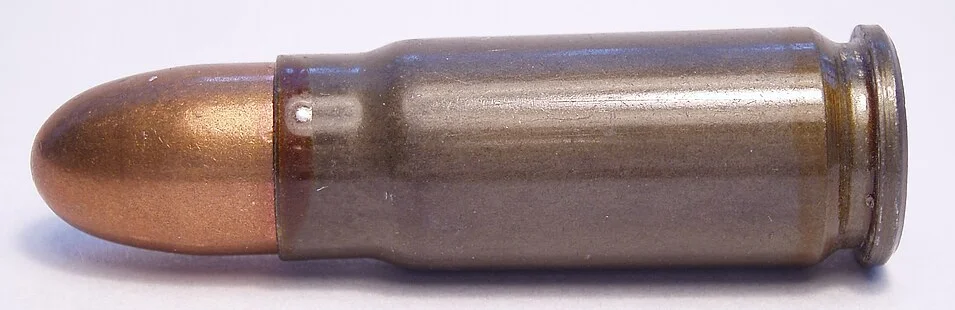
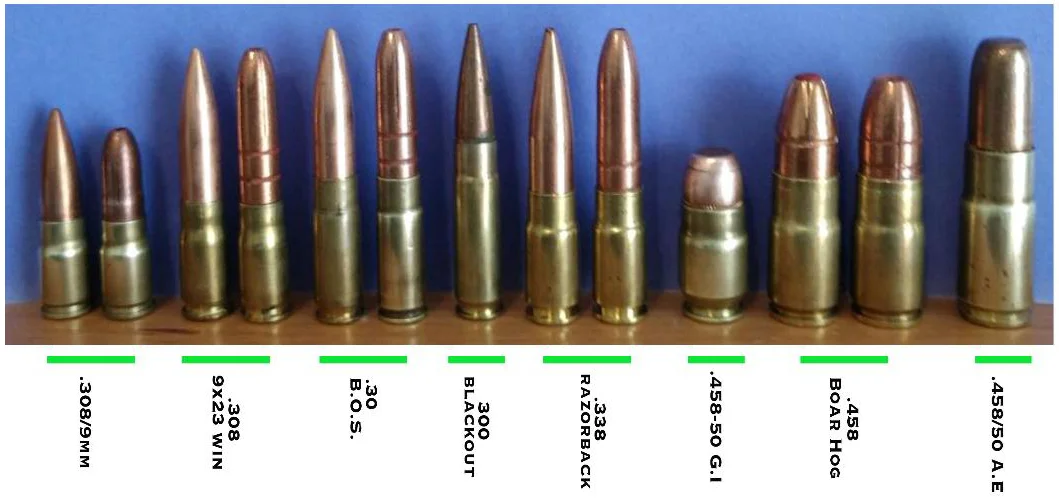
Taking the opportunity to record some opinions here on a topic that folks eventually run into, and have something for newer folks to reference, what are the "Ackley Improved" cartridges that folks have had experience with, and for folks that have built and shot them, and is it "worth it" compared to the standard cartridge?
Giving a brief overview for new folks who aren't familiar, "wildcatting" in firearms is basically running a unique or custom cartridge. For those who might have seen the name "Ackley" or "Ackley Improved" or "AI", there was a gentleman named P.O. Ackley that, at the early-mid part of the 20th century, was interested in gaining more performance from rifle cartridges. He was a prominent member of the "gun culture" of that era, and wrote books about his various experiments, and so a moniker was eventually developed when the pattern of modifications he applied to cartridges was applied to an existing factory cartridge, even if the development work was being done long after he was deceased, because of the reliable and repeatable methodology he applied.
As an example cartridge, the 280 Remington was introduced in 1957. The cartridge dimensions reflect the prevailing design features of the time, with sloping shoulders and a whole body taper from the base to the shoulder. To create the "wildcat" cartridge, the chamber was redesigned so that the taper along the body was almost completely removed, and the angle of the shoulder was increased, but the reference datum for head spacing off the shoulder was retained. This allowed a greater volume inside the cartridge, and the brass could be formed by simply shooting the original 280 REM in the newly designed chamber, and the pressures would "fire form" the brass to the new chamber dimensions. Once formed, new load development could occur to take advantage of that new brass shape.
Below is a picture comparing the original 280 REM and the "Ackley Improved" version:
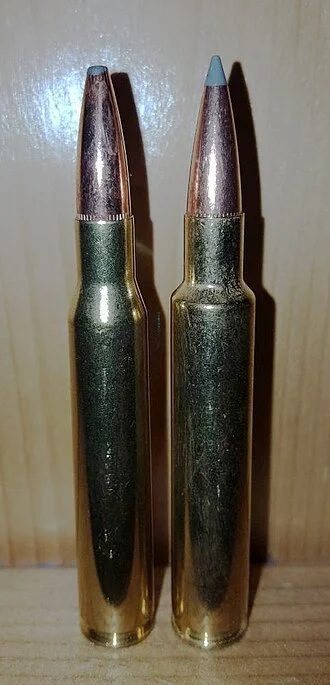
The change in shape increases the internal volume, which in turn means an increase in the available powder charge. With greater powder charges, this can lead to greater velocities and energy being sent downrange. Some cartridge designs respond to this change better than others, based on just how much volume is gained through removing the body taper and having a sharper shoulder angle, with cartridges that had a mild body taper or a sharper shoulder angle to begin with not seeing as much improvement.
As with any design change, there are benefits and drawbacks. Other than the volume increase, the sharper angle on the shoulder resists being pulled as the bullet moves out of the brass when fired. As such, full length trimming and re-sizing the cases because the brass has stretched is no longer a common concern with "Ackley Improved" cartridges, extending the relative life of the brass. A downside is that the sharper angle doesn't lend itself to loading quite as easily, where instead of concentric cones self-centering the bullet and aligning the brass to the chamber, the sharper shoulder and lack of significant body taper can get hung up and prevent smooth cycling. This is why, despite the performance improvements, such changes were not adopted universally, as there is no free lunch and to gain performance in one dimension often costs in another.
Now, with that largely condensed overview of what it means to have an "Ackley Improved" cartridge, what reasons have folks had to go after an "AI" cartridge themselves, and what kinds of experiences have you had with these changes in the design? What difficulties had to be overcome, and are they something that someone who is new to guns could overcome, or are they relegated to those with more experience?
Conversely, if there's corrections to explanations I've written above please let me know and I'll update accordingly. Never know when I don't actually know until it's pointed out by those that do.
Giving a brief overview for new folks who aren't familiar, "wildcatting" in firearms is basically running a unique or custom cartridge. For those who might have seen the name "Ackley" or "Ackley Improved" or "AI", there was a gentleman named P.O. Ackley that, at the early-mid part of the 20th century, was interested in gaining more performance from rifle cartridges. He was a prominent member of the "gun culture" of that era, and wrote books about his various experiments, and so a moniker was eventually developed when the pattern of modifications he applied to cartridges was applied to an existing factory cartridge, even if the development work was being done long after he was deceased, because of the reliable and repeatable methodology he applied.
As an example cartridge, the 280 Remington was introduced in 1957. The cartridge dimensions reflect the prevailing design features of the time, with sloping shoulders and a whole body taper from the base to the shoulder. To create the "wildcat" cartridge, the chamber was redesigned so that the taper along the body was almost completely removed, and the angle of the shoulder was increased, but the reference datum for head spacing off the shoulder was retained. This allowed a greater volume inside the cartridge, and the brass could be formed by simply shooting the original 280 REM in the newly designed chamber, and the pressures would "fire form" the brass to the new chamber dimensions. Once formed, new load development could occur to take advantage of that new brass shape.
Below is a picture comparing the original 280 REM and the "Ackley Improved" version:
The change in shape increases the internal volume, which in turn means an increase in the available powder charge. With greater powder charges, this can lead to greater velocities and energy being sent downrange. Some cartridge designs respond to this change better than others, based on just how much volume is gained through removing the body taper and having a sharper shoulder angle, with cartridges that had a mild body taper or a sharper shoulder angle to begin with not seeing as much improvement.
As with any design change, there are benefits and drawbacks. Other than the volume increase, the sharper angle on the shoulder resists being pulled as the bullet moves out of the brass when fired. As such, full length trimming and re-sizing the cases because the brass has stretched is no longer a common concern with "Ackley Improved" cartridges, extending the relative life of the brass. A downside is that the sharper angle doesn't lend itself to loading quite as easily, where instead of concentric cones self-centering the bullet and aligning the brass to the chamber, the sharper shoulder and lack of significant body taper can get hung up and prevent smooth cycling. This is why, despite the performance improvements, such changes were not adopted universally, as there is no free lunch and to gain performance in one dimension often costs in another.
Now, with that largely condensed overview of what it means to have an "Ackley Improved" cartridge, what reasons have folks had to go after an "AI" cartridge themselves, and what kinds of experiences have you had with these changes in the design? What difficulties had to be overcome, and are they something that someone who is new to guns could overcome, or are they relegated to those with more experience?
Conversely, if there's corrections to explanations I've written above please let me know and I'll update accordingly. Never know when I don't actually know until it's pointed out by those that do.


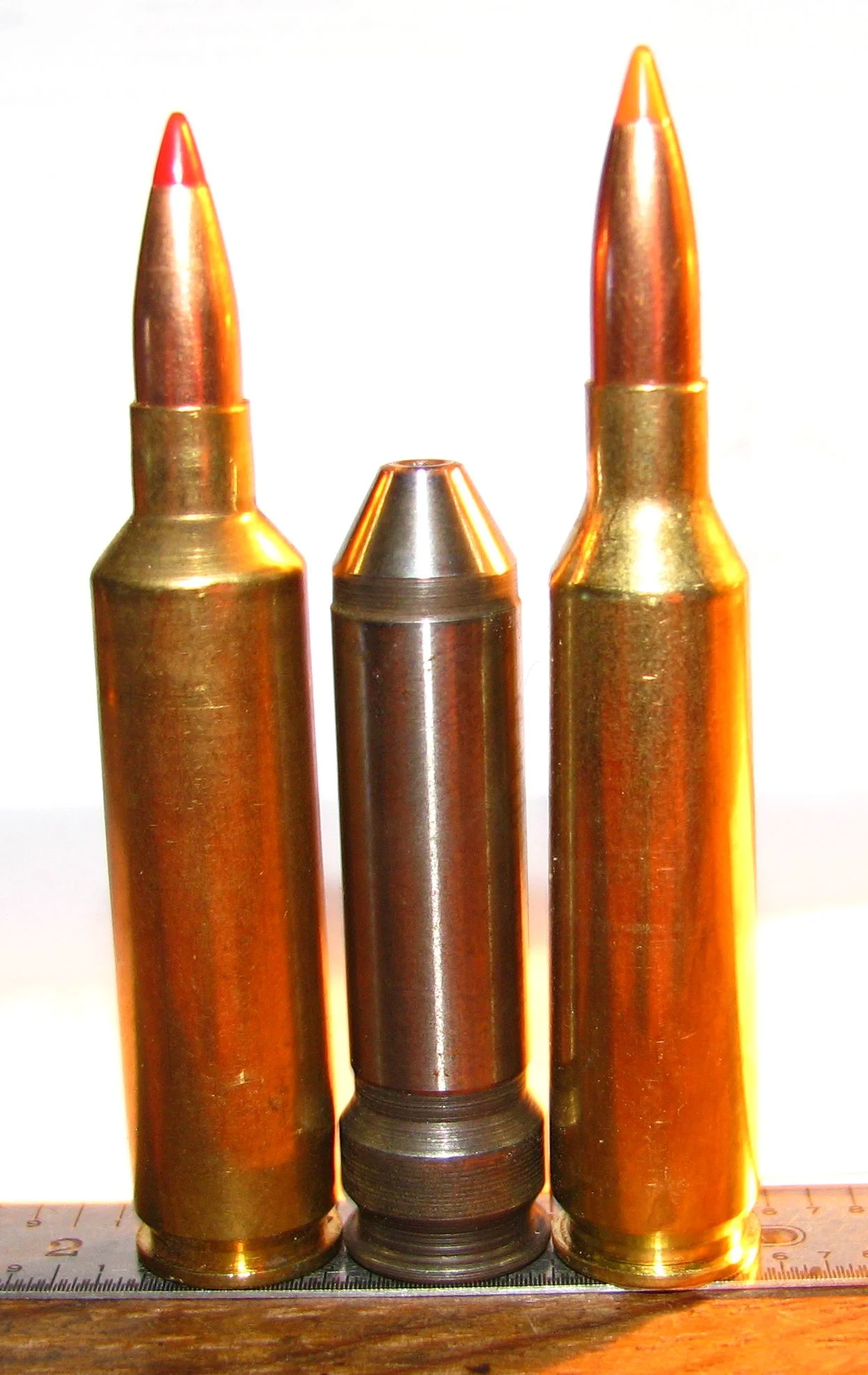


 But, I’ll just have to keep on admiring. They might be cheap next to a Tangent Theta, but still too rich for my blood.