1/4" 10 dot challenge.

NF1E

Well-known member
Platinum Member
Joined
Jan 12, 2026
Messages
144
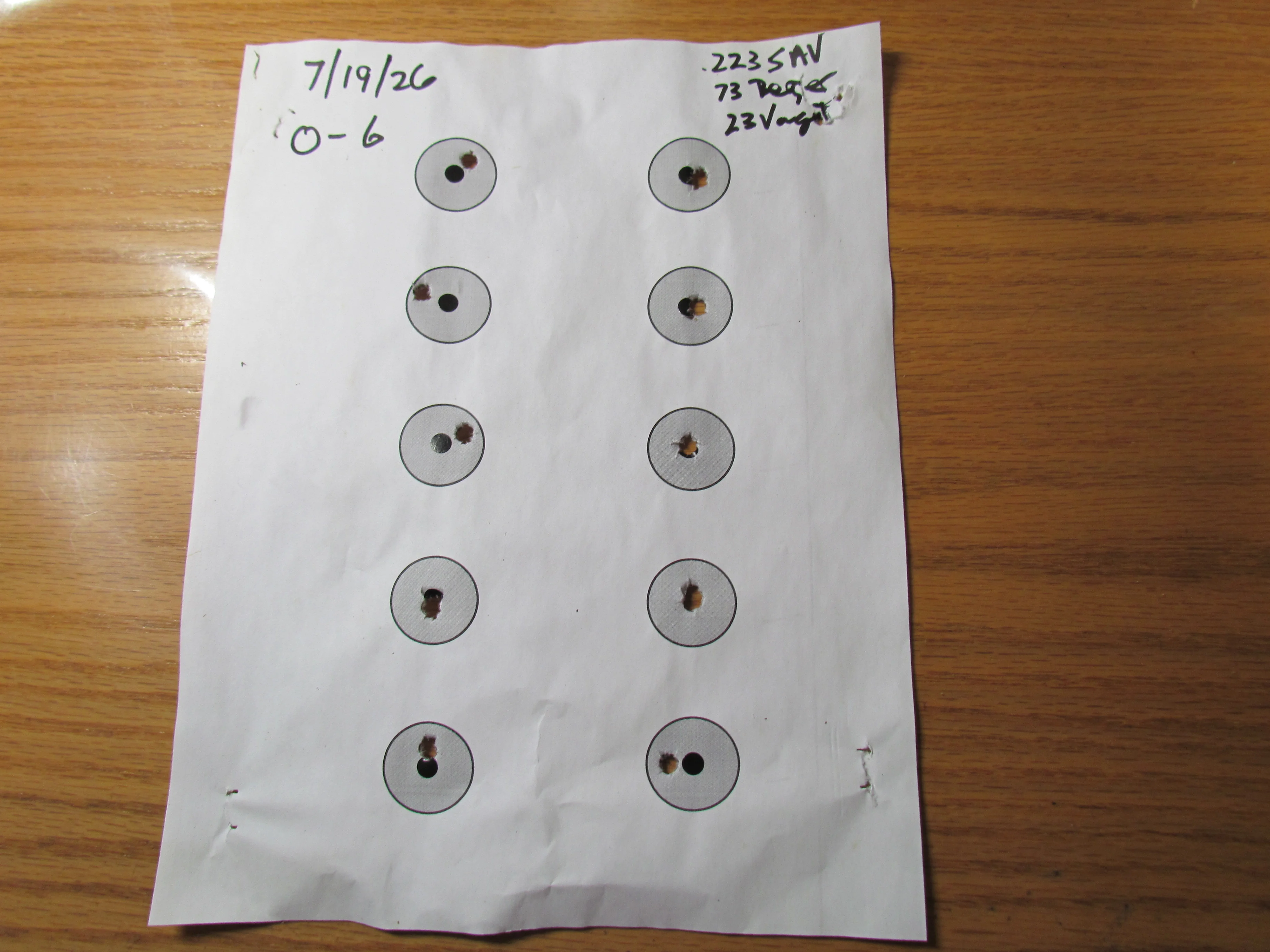
7/19/26 1/4" 10 dot challenge shot at 100 yds. Score 0-6. Savage .223 with bull SS Shilen 26". Scope 15-55 NF Competition. Ammo hand loaded Starline brass, 73 gn Berger over 23 gn Varget set off with 205M primers. Shot off front rest with rear bunny bag. Whatta Hobby!
IMG_4364.webp
 
Art, what target is that?......reminds me of the RFC 10 Bull days.

Would be kind of cool to strike up a forum 10 Bull challenge here for Savage rifles only. Maybe have various classes like Factory/Open/Semi/Rimfire....
Just a 1" 10 dot printed on 8 x 11 and I add the 1/4" Chromalable dots for the aim point. Works great.
Sounds like a great idea. Done it on a couple of other forums but not much participation. Few 1/4 moa shooters out there. Still fun.
 
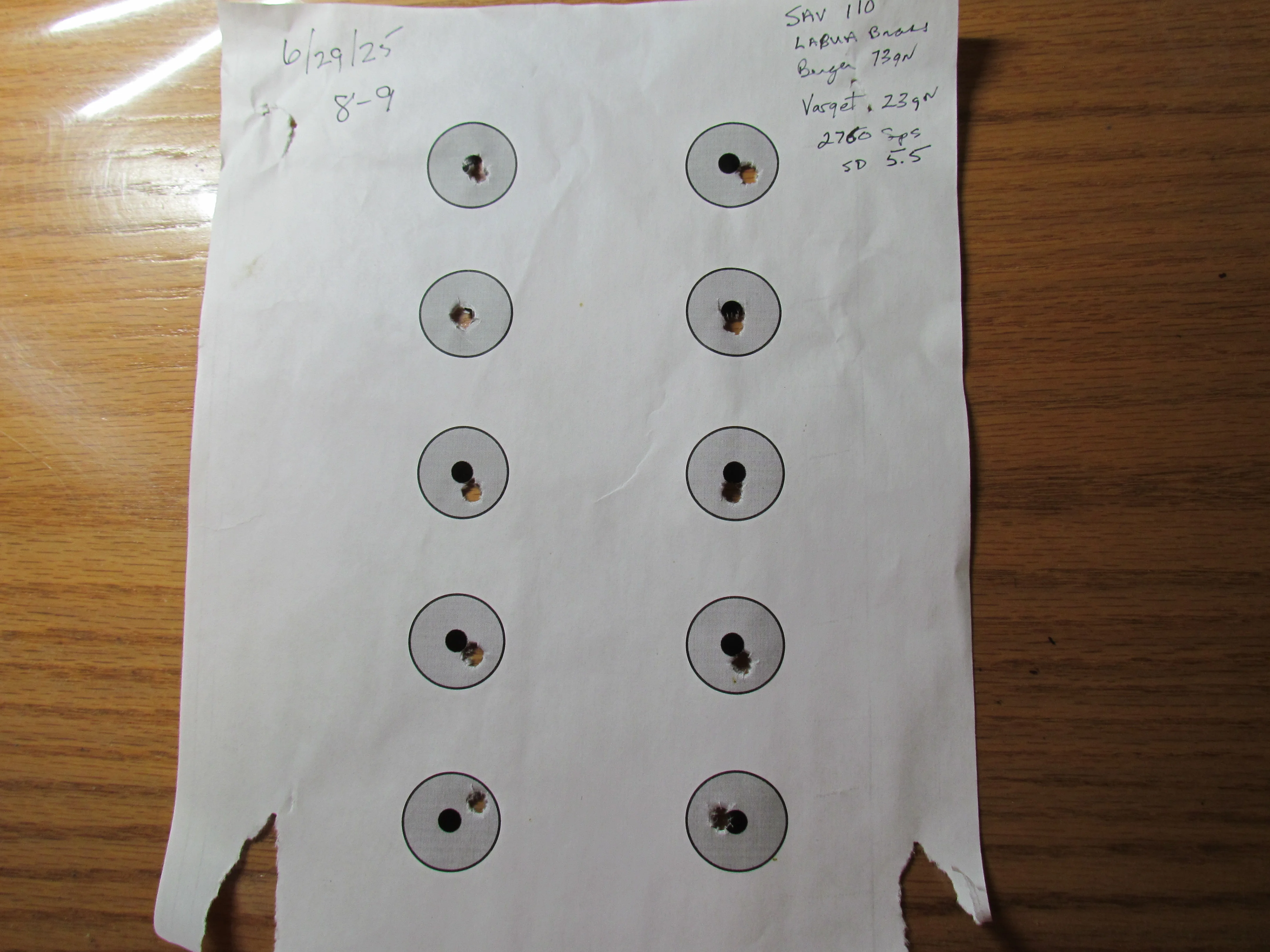
Best I have done on this challenge was an 8-9 a year ago. That's 8 hits in a row, a miss on 9 and a hit on dot 10. I keep trying for that 10-10 but it hasn't happened yet. Whatta Hobby!

IMG_4023.webp
 
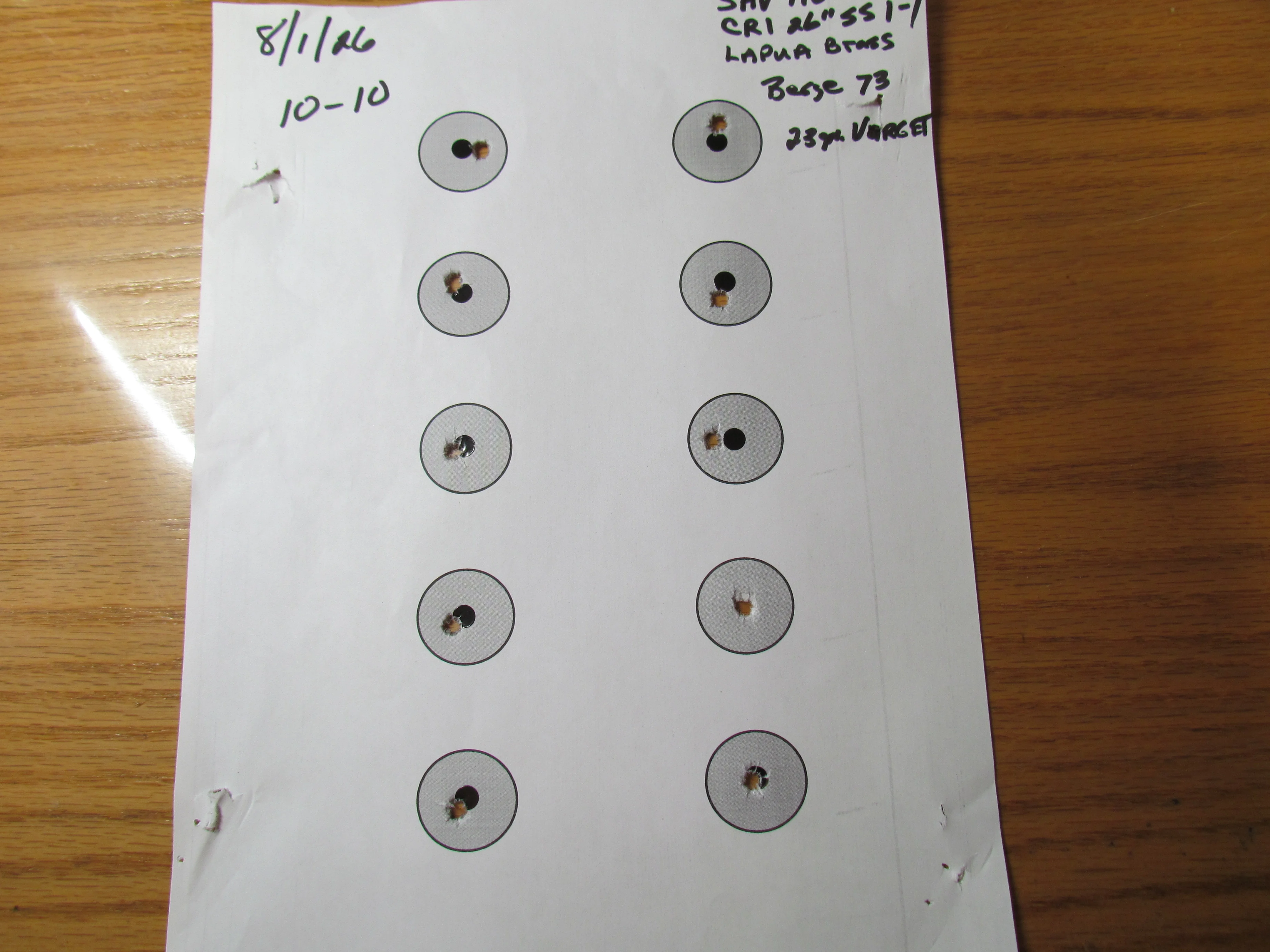
Entry for August 2026. 10-10 shot off front rest with bunny bag in the rear. Savage 110 with Criterion 26" SS bull barrel with OSS suppressor. Scoped with Sightron S6. Ammo is Lapua new Brass that had been trimmed and tension set with mandrel primed with 205M over 23 gn of Varget pushing a Berger 73 gn boat tail target bullet at 2750. Whatta Hobby!

IMG_5674.webp
 
Hmmm.. Well, OK 😏 We will give it to ya.😉

The one on the right side is a bit suspect.. However, directly below that is a PERFECT Bullseye! Great shooting👍
 
Thanks. I used a Gehmann .22 scoring plug. Seeing I am only competing against myself with this challenge it's OK. I an open competition a .30 plug is allowed because both .224 and .308 get into it. Whatta Hobby!
 
I'll play! We generally put five into a quarter - but two on paper sounds like fun.
I'll grab a Savage 112 FVSS in .223rem this Sunday. What diameter are the rings on target?

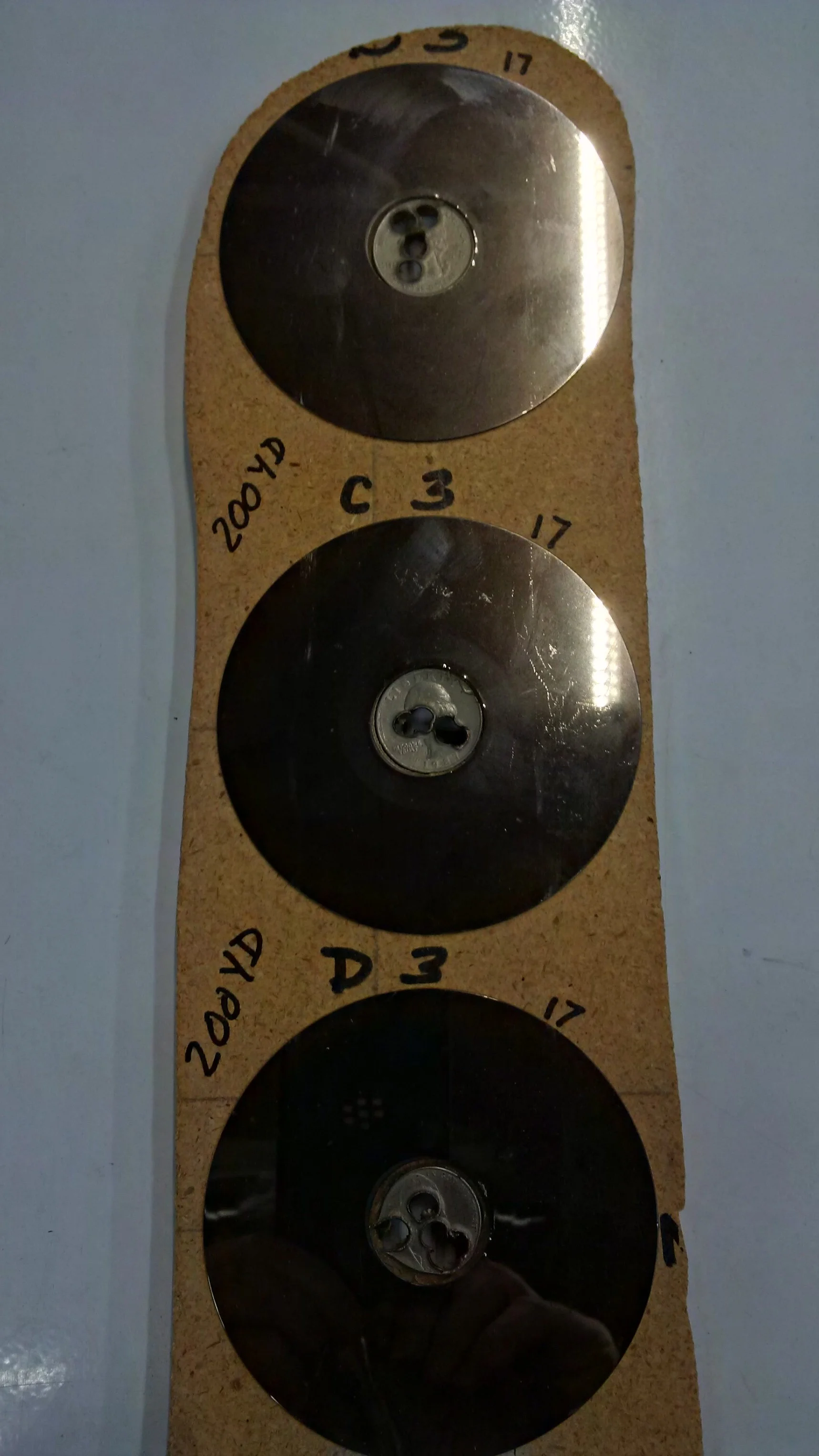
100 Yd - .223

pic 007 - 2a.webp
223 Rem.webp


200 Yd - .17 Rem
17A.webp
 
Last edited:
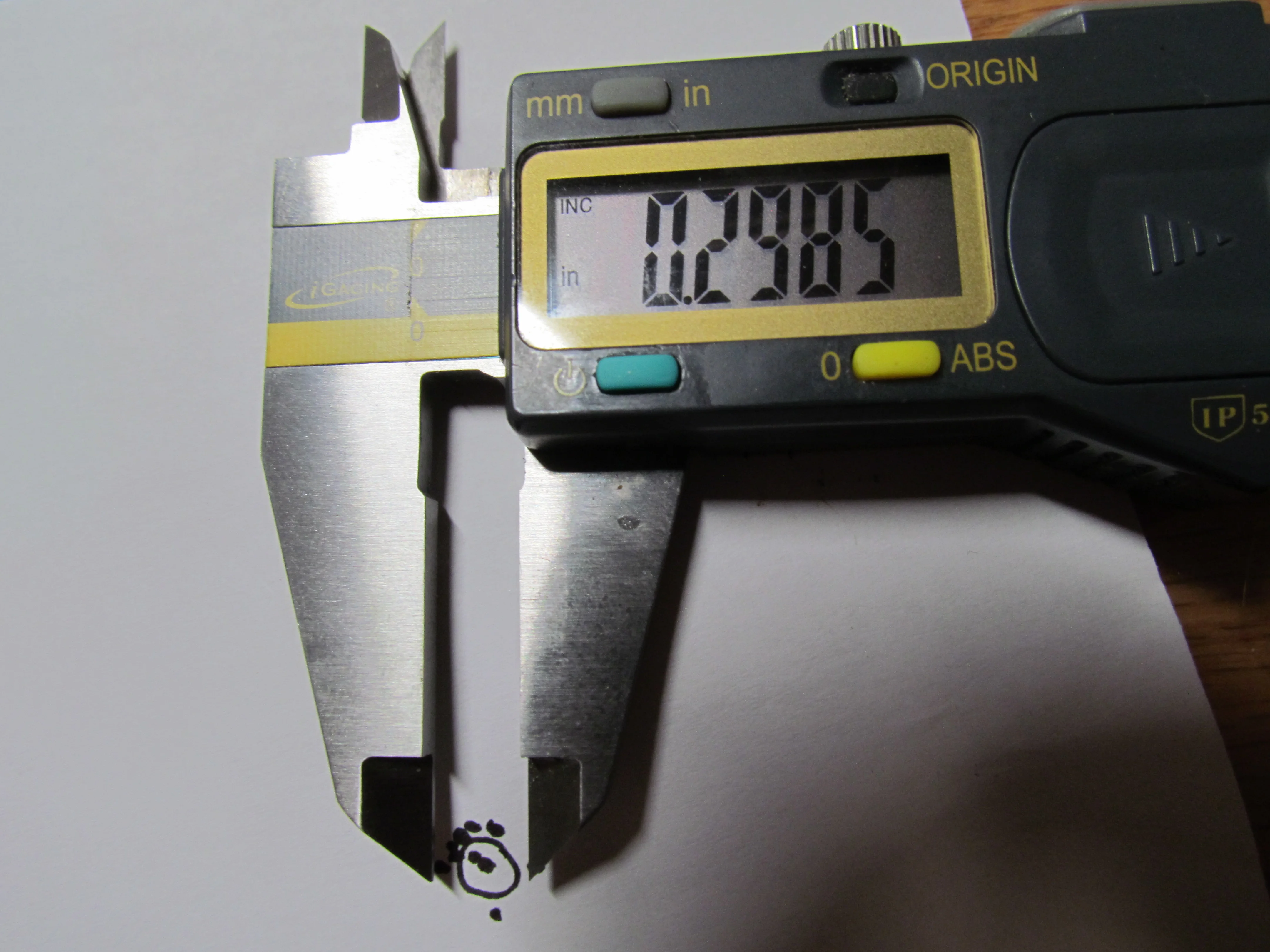
For those that look for group size the 10-10 center plotted to a .2985 max for 10 rnds at 100 yds. Whatta Hobby!

View attachment 1007
Could you please explain what we're looking at in the picture? What does the .2985, on the caliper, represent?

Also, I want to print up matching targets - what is the diameter of the bullseye and the outside circle?
Thanks!
 
Could you please explain what we're looking at in the picture? What does the .2985, on the caliper, represent?

Also, I want to print up matching targets - what is the diameter of the bullseye and the outside circle?
Thanks!

I’m gonna guess it means the 10 shots taken, when plotted around a single dot, end up being a .2985 MOA group. I believe the picture is simply a representation of this in pencil? Just to show it?

Is that right?
 
I’m gonna guess it means the 10 shots taken, when plotted around a single dot, end up being a .2985 MOA group. I believe the picture is simply a representation of this in pencil? Just to show it?

Is that right?
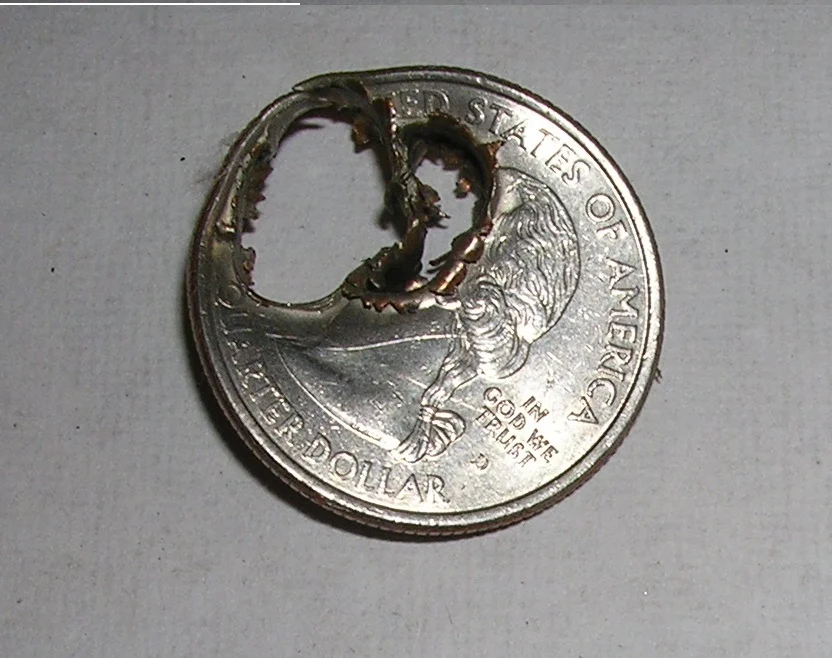
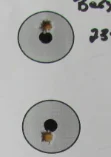
That's what I thought at first, but it can't be from the target shown above then. If those holes are from a .224 and that dark bullseye has got to be a quarter of an inch (or more).
1785714002064.webp


Neither the top or bottom hole broke the center bullseye. Even if that bullseye were a .224 diameter, we'd have three distinct .224 measurements. 3 X .224 equals a .672 outside to outside group which would be a .428 MOA
 
Circle is 1" with 1/4" dot. Plotted is the center of each .224 hit on target. The .2985 is max spread of centers. Easier doing the centers than trying to establish max spread using .224 holes and subtracting one bullet diameter from the max. We end up with the same solution either way. I like my way for my personal calculations. If you drop a scoring gauge in the holes in your photo, you will see that both holes go well into the center dot by almost half. Whatta Hobby!
 
Circle is 1" with 1/4" dot. Plotted is the center of each .224 hit on target. The .2985 is max spread of centers. Easier doing the centers than trying to establish max spread using .224 holes and subtracting one bullet diameter from the max. We end up with the same solution either way. I like my way for my personal calculations. If you drop a scoring gauge in the holes in your photo, you will see that both holes go well into the center dot by almost half. Whatta Hobby!
That's awesome - I'll see if can even get close to your groups :)
 
Last edited:
That's what I thought at first, but it can't be from the target shown above then. If those holes are from a .224 and that dark bullseye has got to be a quarter of an inch (or more).
View attachment 1009

Neither the top or bottom hole broke the center bullseye. Even if that bullseye were a .224 diameter, we'd have three distinct .224 measurements. 3 X .224 equals a .672 outside to outside group which would be a .428 MOA
One Bullet diameter is always subtracted from any group size. Otherwise, how could groups between say, a 338 Lapua Magnum & 223 Winchester ever be compared? The 338 could be MUCH more consistent, but always lose because it’s a larger caliber. So always subtract the caliber’s diameter from the group it creates. 😉
 
That's why I prefer to measure center of the holes and calculate things from there. If we were shooting wad cutters, it might make more sense but with different paper types and bullet profiles, the center of the holes remain a constant. Whatta Hobby!
 
That's why I prefer to measure center of the holes and calculate things from there. If we were shooting wad cutters, it might make more sense but with different paper types and bullet profiles, the center of the holes remain a constant. Whatta Hobby!
Yes, essentially the same thing, but most accurate. Good stuff.🙂

But we know you aren’t much for groups anywho’s NF1E.😏 You just like shooting teeny, tiny little targets! My favorite shooting is similar, however, I enjoy shooting LARGER targets, really, really far away. 😊 Accuracy is both your & my own attraction. (though I don’t get to indulge much at all any more.😔)
 
One Bullet diameter is always subtracted from any group size. Otherwise, how could groups between say, a 338 Lapua Magnum & 223 Winchester ever be compared? The 338 could be MUCH more consistent, but always lose because it’s a larger caliber. So always subtract the caliber’s diameter from the group it creates. 😉
"One bullet diameter is always subtracted from the group size". Really? So if you measure your groups from the center of the bullet impact, like NF1E does, a group where two .224 bullets are touch each other - you would measure that group as .224 of an inch?

Perhaps you meant to say, "if the group is measured from the outside edges" (As I measure my groups), then you do subtract one bullet diameter.

Let me help you with the math from above. If the subject group was .672, measured from the outside edges, we would calculate the MOA as (.672 - .224) divided by 1.047. Resulting in a .428 Minute of Angle.
 
Any group is measured less ONE bullet diameter, or more correctly, from Center to Center or each shot, as NF1E point out. (More accurate) Once again: Groups should not be measured Edge to Edge, as different bullet styles can produce different size holes (as NF1E also touched on.), but the more important issue is a larger Caliber could never compete with a smaller Caliber measuring Edge to Edge. I don’t know why you have issue with that.
 
Last edited:
Give him a chance to engage his thinker instead of his keyboard. I think he does get it in the long run. You are right, when measuring center to center, the bullet diameter has nothing to do with the calculation. Whatta Hobby!
 

Latest posts

Back
Top