- Joined
- Jan 12, 2026
- Messages
- 353
Not sure if this is the right place to post this, but it shows how a Savage action is capable of performing.
Rifle: Savage 12 FV .223 with an Oryx stock and Shilen Select Match 1:7 twist 416R SS 26.125-inch barrel
Scope: Leupold 45X Competition
Front & Rear Rests: Sinclair Gen 3 F-class Bipod with a Large Protektor rear bag with 1-inch hard base
Bullet: 80 gr Hornady ELD-M #22831
Powder: Varget 22.2 gr
Seating Depth: 2.512
Muzzle Velocity: 2667 fps
Chamber Pressure: 46,453 psi
Optimum Bullet Time: 1.305 msec.
I had shot 2 sighters to check my scope and then settled down to get set up for the first load of the morning. I was aiming at the bottom tip of the vertical line shown in the picture.
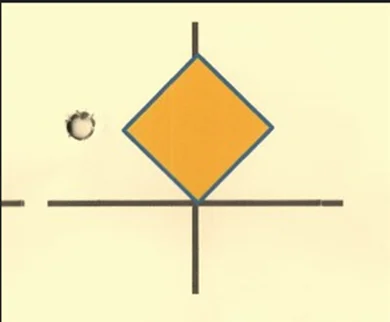
The diamond is 1 inch on the vertical from tip to tip. The sides are 0.7 inches long and the horizontal and vertical lines are 0.050 inches. The horizontal line is 2.125 inches long. I print 12 targets on an 8 ½ by 11-inch, 80 lb. paper.
The bullet hole is the first 80 gr bullet sighter. This should give you an idea of what a one hole looks like at 100 yards. This is before I adjusted the scope reticle to hit closer to my aim point, but not exactly on my aim point because a bullet hole is about 4.5X the size of where I would be aiming and would destroy any chance of me aiming precisely. I adjusted the scope for this particular load to get the POI nearer the POA and shot another sighter to verify the new POI and then changed to another target image.
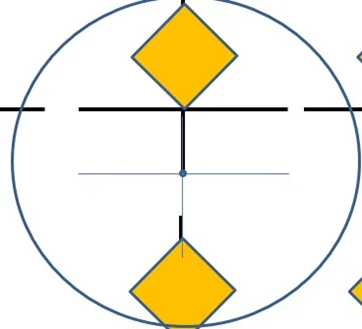
The crosshairs on the picture above show where I was aiming and the approximate size of the image I had through the scope when I started to shoot the first round of the group. This is what I was seeing through my 45X scope at 100 yards.
The following is the scan of the image of the target and the resultant measurement of the 5-shot group.
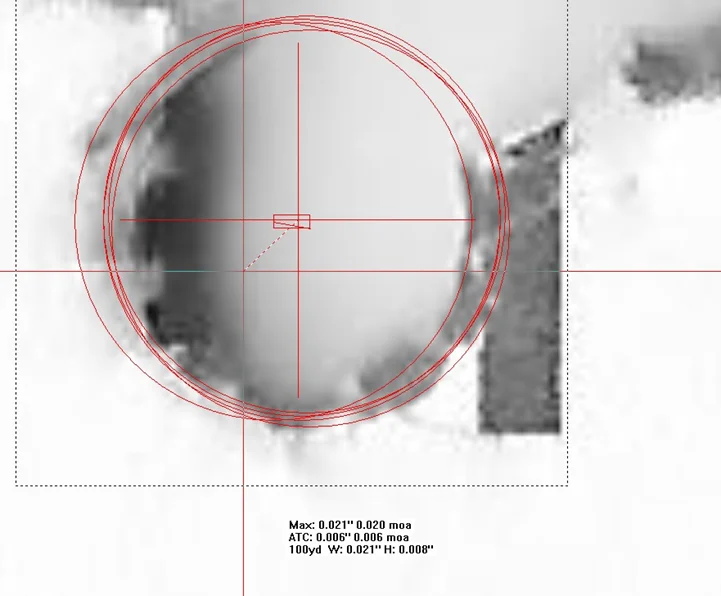
The first shot was at the darkest part of the bullet hole and just touching the edge of the vertical line.
The second shot was pretty much in the same hole. At 100 yards, it looked like there was still only one hole. (This picture is enlarged over 200 times.)
At first, I thought I might have missed the aim point entirely because there was only one hole visible. But there were no other holes on the paper other than the 2 sighters on a different target and I felt that the 2nd shot was a ‘good one’.
I shot a third shot and it also looked like it was also in the same hole. I shot a fourth shot and the hole didn’t look any bigger.
Through the 45X scope at 100 yards, they still looked like they were all in the same hole. (Actually, the first four shots later measured 0.008 from center to center. No way I could see that difference at 100 yards even with a 45X scope.)
I realized that this was a really rare circumstance for me, but I also knew that I had already shot 6 rounds, including the two sighters while adjusting the scope reticle, and was ready to shoot the 7th shot. I knew this barrel had a tendency, when hot, to drop bullets slightly, so I was concerned about what to do. Since I was on a roll, and my concentration seemed excellent, I went ahead and took the next shot, anyway.
The fifth bullet is the furthest to the left, possibly because I must have moved slightly while I was deciding on taking the last shot. It was the major contributor to the 0.021 center-to-center measurement.
I could see that the bullet hole was just slightly larger, even at 100 yards with the 45X scope, so to protect this outstanding group, I changed my aim point to the top of the 1-inch diamond that was about 2-inches above my initial aim point. I shot the remainder of the 25-round load near that aim point and the groups gradually lowered as the barrel heated up.
The next three groups measured 0.193, 0.232 and 0.233. Those remaining groups were just a bit larger than my average group size with this barrel for this bullet and powder. I think I may have been trying too hard to shoot another incredible group and may have let that distract me.
By the time I was finished with this load, the barrel temperature was over 126 degrees F. measured on the temp strip that I mount on all my target barrels. The strip is not calibrated and shows the temperature of the outside of the barrel not the bore, but it has always been a very consistent indicator. The temperature showing on the strip after the first group was only 85 degrees F. Normally, this barrel drops the POI by about 0.2 inches when the barrel temp gets up to 105-108 degrees.
With this barrel, even with my ‘82-year-old shooter induced variations’ that come primarily from waning concentration during each session, 128 (28.1%) of my 5-round groups at 100 yards since April 2025 are still under .200 inches. That said, I have only shot three groups that were under 0.100 (0.7%) out of a total of 456 groups with this new barrel. The other two measured 0.094 and 0.098.
This one group (0.021) was a truly extremely rare occurrence. I doubt I will ever shoot another one like it.
Rifle: Savage 12 FV .223 with an Oryx stock and Shilen Select Match 1:7 twist 416R SS 26.125-inch barrel
Scope: Leupold 45X Competition
Front & Rear Rests: Sinclair Gen 3 F-class Bipod with a Large Protektor rear bag with 1-inch hard base
Bullet: 80 gr Hornady ELD-M #22831
Powder: Varget 22.2 gr
Seating Depth: 2.512
Muzzle Velocity: 2667 fps
Chamber Pressure: 46,453 psi
Optimum Bullet Time: 1.305 msec.
I had shot 2 sighters to check my scope and then settled down to get set up for the first load of the morning. I was aiming at the bottom tip of the vertical line shown in the picture.
The diamond is 1 inch on the vertical from tip to tip. The sides are 0.7 inches long and the horizontal and vertical lines are 0.050 inches. The horizontal line is 2.125 inches long. I print 12 targets on an 8 ½ by 11-inch, 80 lb. paper.
The bullet hole is the first 80 gr bullet sighter. This should give you an idea of what a one hole looks like at 100 yards. This is before I adjusted the scope reticle to hit closer to my aim point, but not exactly on my aim point because a bullet hole is about 4.5X the size of where I would be aiming and would destroy any chance of me aiming precisely. I adjusted the scope for this particular load to get the POI nearer the POA and shot another sighter to verify the new POI and then changed to another target image.
The crosshairs on the picture above show where I was aiming and the approximate size of the image I had through the scope when I started to shoot the first round of the group. This is what I was seeing through my 45X scope at 100 yards.
The following is the scan of the image of the target and the resultant measurement of the 5-shot group.
The first shot was at the darkest part of the bullet hole and just touching the edge of the vertical line.
The second shot was pretty much in the same hole. At 100 yards, it looked like there was still only one hole. (This picture is enlarged over 200 times.)
At first, I thought I might have missed the aim point entirely because there was only one hole visible. But there were no other holes on the paper other than the 2 sighters on a different target and I felt that the 2nd shot was a ‘good one’.
I shot a third shot and it also looked like it was also in the same hole. I shot a fourth shot and the hole didn’t look any bigger.
Through the 45X scope at 100 yards, they still looked like they were all in the same hole. (Actually, the first four shots later measured 0.008 from center to center. No way I could see that difference at 100 yards even with a 45X scope.)
I realized that this was a really rare circumstance for me, but I also knew that I had already shot 6 rounds, including the two sighters while adjusting the scope reticle, and was ready to shoot the 7th shot. I knew this barrel had a tendency, when hot, to drop bullets slightly, so I was concerned about what to do. Since I was on a roll, and my concentration seemed excellent, I went ahead and took the next shot, anyway.
The fifth bullet is the furthest to the left, possibly because I must have moved slightly while I was deciding on taking the last shot. It was the major contributor to the 0.021 center-to-center measurement.
I could see that the bullet hole was just slightly larger, even at 100 yards with the 45X scope, so to protect this outstanding group, I changed my aim point to the top of the 1-inch diamond that was about 2-inches above my initial aim point. I shot the remainder of the 25-round load near that aim point and the groups gradually lowered as the barrel heated up.
The next three groups measured 0.193, 0.232 and 0.233. Those remaining groups were just a bit larger than my average group size with this barrel for this bullet and powder. I think I may have been trying too hard to shoot another incredible group and may have let that distract me.
By the time I was finished with this load, the barrel temperature was over 126 degrees F. measured on the temp strip that I mount on all my target barrels. The strip is not calibrated and shows the temperature of the outside of the barrel not the bore, but it has always been a very consistent indicator. The temperature showing on the strip after the first group was only 85 degrees F. Normally, this barrel drops the POI by about 0.2 inches when the barrel temp gets up to 105-108 degrees.
With this barrel, even with my ‘82-year-old shooter induced variations’ that come primarily from waning concentration during each session, 128 (28.1%) of my 5-round groups at 100 yards since April 2025 are still under .200 inches. That said, I have only shot three groups that were under 0.100 (0.7%) out of a total of 456 groups with this new barrel. The other two measured 0.094 and 0.098.
This one group (0.021) was a truly extremely rare occurrence. I doubt I will ever shoot another one like it.
Last edited: