
You are using an out of date browser. It may not display this or other websites correctly.
You should upgrade or use an alternative browser.
You should upgrade or use an alternative browser.
Anyone here have a Savage 110 Precision Elite in 223?
- Thread starter Tacoma
- Start date

It would be a sweet rifle to have. Im impressed with my 110 Varment in .223. It's very accurate with the right load. Center bottom group. With RMR'S 69 grain target bullets H335 powder. 100 yards.
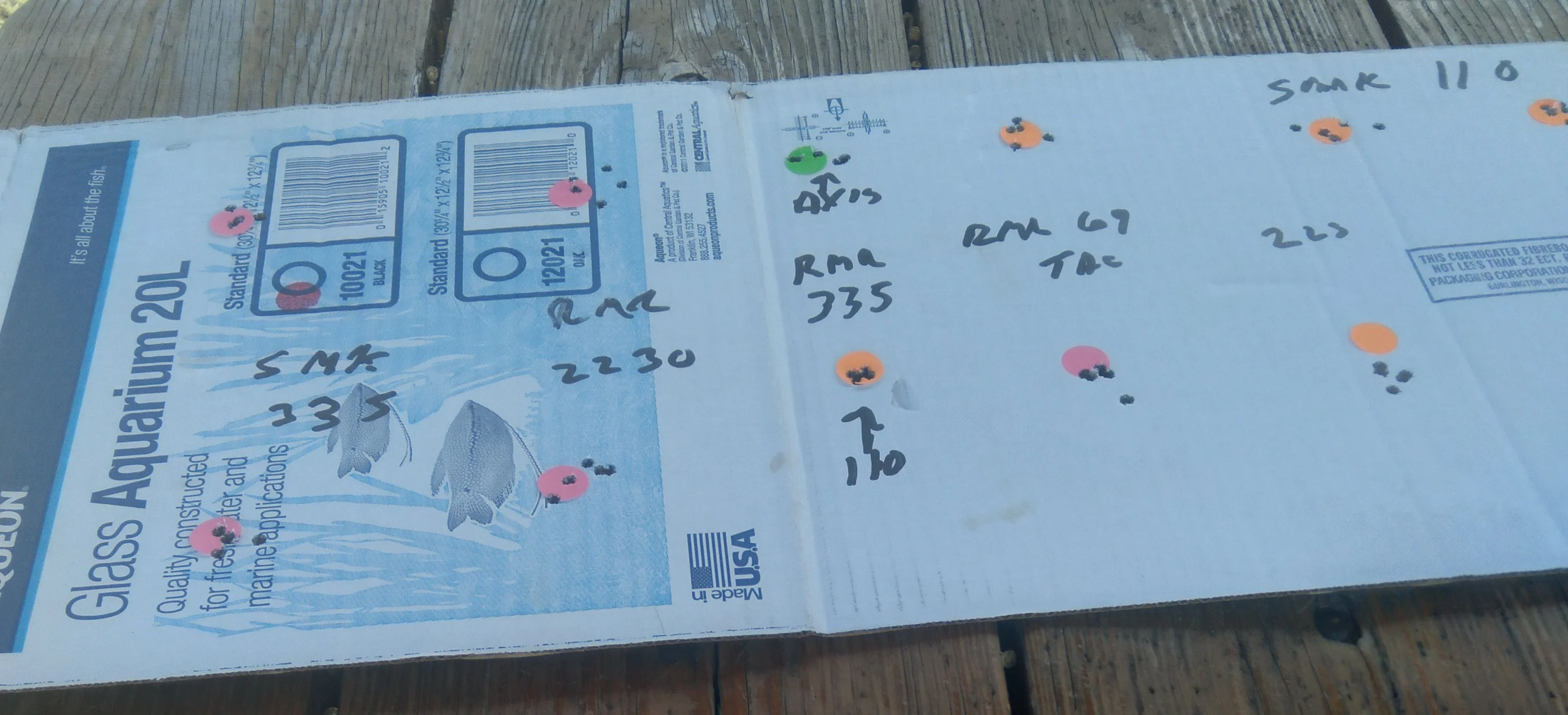
Very nice. To be honest, I always thought of H335 as a powder for larger calibers and cases. I've pretty much stuck with Varget and H4895 for my .223 target loads with heavier bullets. Still, I do ahve a few pounds of H335 in the locker if you care to share your load here or via PM. Thanks for the response.It would be a sweet rifle to have. Im impressed with my 110 Varment in .223. It's very accurate with the right load. Center bottom group. With RMR'S 69 grain target bullets H335 powder. 100 yards.
View attachment 875
Oh trust me, I've lost a few nights sleep over the custom build thing already. I've been looking at Savage (and bighorn) actions as well as prefit barrels over at Nothland Shooters supply on /off for some time now. Lots of options . Particularly with barrels. ( Assuming inventory is not depleted.) Building would be fun for sure. Still, it's hard to beat what the precision elite offers for $1800 ish. I certainly couldn't build it for that with an MDT chassis. ( Truth be told, I actually preffer a quality tac/target stock over a chassis for most purposes anway.) This thread is really just part of a decision making process for me. Currently leaning towards the Elite but......It’s nice. But most of us prefer to build our OWN “Precision Elite”. I wanted another Chassis, and prefer building/modifying my own firearms. But if you dig it and it’s calling to ya, go for it.
p.s. If you have any suggestions for sources/specs , feel free to pass them along. I'm listening.
Very nice. To be honest, I always thought of H335 as a powder for larger calibers and cases. I've pretty much stuck with Varget and H4895 for my .223 target loads with heavier bullets. Still, I do ahve a few pounds of H335 in the locker if you care to share your load here or via PM. Thanks for the response.
For the 69's. 23 grains H335 at a COAL of 2.270. I find both of my Savage .223 like H335 the best. Followed by TAC.Oh trust me, I've lost a few nights sleep over the custom build thing already. I've been looking at Savage (and bighorn) actions as well as prefit barrels over at Nothland Shooters supply on /off for some time now. Lots of options . Particularly with barrels. ( Assuming inventory is not depleted.) Building would be fun for sure. Still, it's hard to beat what the precision elite offers for $1800 ish. I certainly couldn't build it for that with an MDT chassis. ( Truth be told, I actually preffer a quality tac/target stock over a chassis for most purposes anway.) This thread is really just part of a decision making process for me. Currently leaning towards the Elite but......
p.s. If you have any suggestions for sources/specs , feel free to pass them along. I'm listening.
I was going to the range tomorrow. I'll whip up some of these for a test run before I pack up. Thanks for sharing!For the 69's. 23 grains H335 at a COAL of 2.270. I find both of my Savage .223 like H335 the best. Followed by TAC.
Cool looking forward to the range report.

- Joined
- Jan 12, 2026
- Messages
- 353
With my 26-in factory barreled Savage 12 FV 1:9 twist in .223, I shot everything from 50 gr to 77 grain bullets.
The light bullets up through 55 grains with a sample size of 107 5-round groups favored N133 with an overall average of 0.297.
60 grain bullets and 68 grain bullets didn't like IMR4166, but I didn't waste my time shooting many of them.
Nosler and RMR 69 grain bullets shot Varget better than IMR4166, N140 or N540, but not quite up to the 69 SMK's accuracy.
Sierra 69 SMKs shot Varget and N540 almost the same but better than IMR4166 and N140 - and quite a bit better than the Nosler CCs or RMR 69.
Sierra 69 TMKs shot Varget better than IMR4166, N140 and H4895 but about 0.013 worst than the 69 SMKs.
73 grain bullets shot best with Varget, but not as well as the 69 SMKs.
75 grain bullets shot terrible by comparison to the 69 SMKs.
77 gr Bergers, Nosler CCs, and Sierra TMKs shot about the same as the 73s,
77 SMKs shot best with N540 and Varget and about the same or slightly better than the 69 SMKs and also not as well with IMR4415 and N140.
Interestingly, for bullets from 69 to 77 in the 1:9 twist factory barrel, Varget seemed like the go to powder by less than 2 thousandths average over N540 and by more than 10 thousandths average over every other powder.
The sample size for bullets from 69 to 77 grains is 1,423 5-round groups at 100 yards.
The light bullets up through 55 grains with a sample size of 107 5-round groups favored N133 with an overall average of 0.297.
60 grain bullets and 68 grain bullets didn't like IMR4166, but I didn't waste my time shooting many of them.
Nosler and RMR 69 grain bullets shot Varget better than IMR4166, N140 or N540, but not quite up to the 69 SMK's accuracy.
Sierra 69 SMKs shot Varget and N540 almost the same but better than IMR4166 and N140 - and quite a bit better than the Nosler CCs or RMR 69.
Sierra 69 TMKs shot Varget better than IMR4166, N140 and H4895 but about 0.013 worst than the 69 SMKs.
73 grain bullets shot best with Varget, but not as well as the 69 SMKs.
75 grain bullets shot terrible by comparison to the 69 SMKs.
77 gr Bergers, Nosler CCs, and Sierra TMKs shot about the same as the 73s,
77 SMKs shot best with N540 and Varget and about the same or slightly better than the 69 SMKs and also not as well with IMR4415 and N140.
Interestingly, for bullets from 69 to 77 in the 1:9 twist factory barrel, Varget seemed like the go to powder by less than 2 thousandths average over N540 and by more than 10 thousandths average over every other powder.
The sample size for bullets from 69 to 77 grains is 1,423 5-round groups at 100 yards.
I need to try some with Varget myself. I was out of it for a long time. I have some now on hand. 
- Joined
- Jan 12, 2026
- Messages
- 353
My Savage 12 FV now has a Shilen Select Match barrel after 9,030+ rounds through the factory barrel.
Varget is the only powder I have shot with the new barrel, and the overall average for all 679 measured groups is 0.216 from April 2025 through June 2026,
The first three months averaged 0.227 and I attribute that larger group size average to learning that I had to aim more precisely with a much more accurate barrel. I didn't have that issue with the factory barrel. It just wasn't as precise in shot placement.
All the groups were shot in temperatures ranging from 23 deg. F. to 93 deg. F. Varget velocity variation over the 70 degree temperature range is somewhere between 2.24 and 4 fps. That is less than the variation due to powder/primer burn variation at a constant temperature. I can also experience more than 40 degree change in barrel temperature just with barrel heating shooting 20 rounds in 5 minutes.
For me, Varget is a pretty reliable powder under varying temperature conditions, especially since it is so temperature insensitive.
The average of the groups from July 2025 through Jun 2026 is 0.213 for 557 groups. That improvement can be attributed to concentration on keeping the reticle on precisely the same aim point for each group shot.
Even with the first three months of larger groups, 39+% of all the groups were still under 0.200 and 64+% of them are under 0.226. 85+% of them are under 0.250. Most of the groups over 0.226 have one shot that I managed to allow to stray out of an otherwise good group.
I describe the groups with the one misplaced round the result of 'shooter induced variation' since it doesn't represent the rifle's documented performance but represents a failure by the "nut pulling the trigger".
Varget is the only powder I have shot with the new barrel, and the overall average for all 679 measured groups is 0.216 from April 2025 through June 2026,
The first three months averaged 0.227 and I attribute that larger group size average to learning that I had to aim more precisely with a much more accurate barrel. I didn't have that issue with the factory barrel. It just wasn't as precise in shot placement.
All the groups were shot in temperatures ranging from 23 deg. F. to 93 deg. F. Varget velocity variation over the 70 degree temperature range is somewhere between 2.24 and 4 fps. That is less than the variation due to powder/primer burn variation at a constant temperature. I can also experience more than 40 degree change in barrel temperature just with barrel heating shooting 20 rounds in 5 minutes.
For me, Varget is a pretty reliable powder under varying temperature conditions, especially since it is so temperature insensitive.
The average of the groups from July 2025 through Jun 2026 is 0.213 for 557 groups. That improvement can be attributed to concentration on keeping the reticle on precisely the same aim point for each group shot.
Even with the first three months of larger groups, 39+% of all the groups were still under 0.200 and 64+% of them are under 0.226. 85+% of them are under 0.250. Most of the groups over 0.226 have one shot that I managed to allow to stray out of an otherwise good group.
I describe the groups with the one misplaced round the result of 'shooter induced variation' since it doesn't represent the rifle's documented performance but represents a failure by the "nut pulling the trigger".
So I did get to build and try 10 of these out of the LRPV this week at the end of my range session. I have to say, that they grouped very well. I got side tracked and didn't actually measure the group but I had 4 rounds go into a nickle sized group ( and one flyer which was me). Velocity out of the 26" barrel was pretty fast at an avg of 2943.7 fps ( per my C1 ). These certainly warrent another (and more serious) test with various seating depths. Thanks for shareing!For the 69's. 23 grains H335 at a COAL of 2.270. I find both of my Savage .223 like H335 the best. Followed by TAC.
- Joined
- Jan 12, 2026
- Messages
- 353
Tacoma,
I would suspect that your LRPV has a SS factory barrel. You didn't say what bullet weight you were shooting, but at 2943 fps you were probably up near Pmax.
If you really want to get accuracy from your LRPV at distances out to 300 yards, I would suspect that you would get more accuracy with MVs around 2700 to 2750 fps and with bullets from 73 to 80 and maybe even 90 grains, depending upon your barrel's preferences. I have never gotten great accuracy near Pmax with any Savage that I own.
The only value from loading near Pmax if if you are loading to hunt at distance or you're trying to push bullets out towards 1000 yards.
That recommendation is based upon over 14,000 rounds shot through a Savage 12 FV with factory 26-inch barrel and Shilen 26.125 inch-replacement barrel, and a buddy's 12 LRPV with over 6,000 rounds down his 26-inch barrel that actually measures 26.125 inches. All three were specified at 26-inches.
The 26.125 SS barrels have Optimum Bullet times of 1.305 to1.306 msec. The 26-inch factory barrel had an Optimum Bullet time of 1.361 msec. The difference is in the reflection speed of the Stainless steel and the 0.3% carbon steel barrels.
I would suspect that your LRPV has a SS factory barrel. You didn't say what bullet weight you were shooting, but at 2943 fps you were probably up near Pmax.
If you really want to get accuracy from your LRPV at distances out to 300 yards, I would suspect that you would get more accuracy with MVs around 2700 to 2750 fps and with bullets from 73 to 80 and maybe even 90 grains, depending upon your barrel's preferences. I have never gotten great accuracy near Pmax with any Savage that I own.
The only value from loading near Pmax if if you are loading to hunt at distance or you're trying to push bullets out towards 1000 yards.
That recommendation is based upon over 14,000 rounds shot through a Savage 12 FV with factory 26-inch barrel and Shilen 26.125 inch-replacement barrel, and a buddy's 12 LRPV with over 6,000 rounds down his 26-inch barrel that actually measures 26.125 inches. All three were specified at 26-inches.
The 26.125 SS barrels have Optimum Bullet times of 1.305 to1.306 msec. The 26-inch factory barrel had an Optimum Bullet time of 1.361 msec. The difference is in the reflection speed of the Stainless steel and the 0.3% carbon steel barrels.
- Joined
- Jan 12, 2026
- Messages
- 353
Tacoma,
I find that it takes me at least a session or maybe two to get the feel of a new rifle. You will see improvement in accuracy when you get some trigger time.
If you aren't used to shooting a HS Precision stock with a long barrel, you might have to experiment with your shooting position a bit and also the placement of the front and rear rests.
Also, when I started to shoot target rifles, I had realized that I needed to aim more precisely. With rifles that can't put bullets in the same holes you can get careless when you aim.
A LRPV can shoot very accurately, but only when the shooter aims very precisely.
I find that with a .223 that is capable of 1/4 MOA like a LRPV, having the aim point off 1/2 the width of a target reticle can cause movement of about 0.1 inch of POI variation at 100 yards.
I had to shoot my new Shilen barrel for a month before I figured that out.
I find that it takes me at least a session or maybe two to get the feel of a new rifle. You will see improvement in accuracy when you get some trigger time.
If you aren't used to shooting a HS Precision stock with a long barrel, you might have to experiment with your shooting position a bit and also the placement of the front and rear rests.
Also, when I started to shoot target rifles, I had realized that I needed to aim more precisely. With rifles that can't put bullets in the same holes you can get careless when you aim.
A LRPV can shoot very accurately, but only when the shooter aims very precisely.
I find that with a .223 that is capable of 1/4 MOA like a LRPV, having the aim point off 1/2 the width of a target reticle can cause movement of about 0.1 inch of POI variation at 100 yards.
I had to shoot my new Shilen barrel for a month before I figured that out.
Yes, I agree with all said. Still getting to know this rifle. The learning process is where the fun is for me.Tacoma,
I find that it takes me at least a session or maybe two to get the feel of a new rifle. You will see improvement in accuracy when you get some trigger time.
If you aren't used to shooting a HS Precision stock with a long barrel, you might have to experiment with your shooting position a bit and also the placement of the front and rear rests.
Also, when I started to shoot target rifles, I had realized that I needed to aim more precisely. With rifles that can't put bullets in the same holes you can get careless when you aim.
A LRPV can shoot very accurately, but only when the shooter aims very precisely.
I find that with a .223 that is capable of 1/4 MOA like a LRPV, having the aim point off 1/2 the width of a target reticle can cause movement of about 0.1 inch of POI variation at 100 yards.
I had to shoot my new Shilen barrel for a month before I figured that out.
As for the reloads, I have my go to loads of 77 gr SMK's and Varget and I doubt anything will replace that combo in any .223/5.56 I own. However, @CoalcrackerAI generously offered his pet load and I figured I'd give it a try since I already had everything in his recipe. It was a faster than usual load for me but it was a good data point for some initial load developement with the lighter 68/69 gr bullets

ONE-TEN
Well-known member
- Joined
- Mar 3, 2026
- Messages
- 1,055
Ya know, it was actually on Savage Shooters that I first read about people speaking of Bullet exit times in milliseconds, and number of Barrel reflections based on Steel and blah, blah, blah.
It all sounds so very smart & intellectual and all. But I have a question? How are we measuring all of this? To count anything in MILLISECONDS vs the number of barrel reflections, the actual harmonics of the barrel, would require some very high speed filming at least! But for precise measurement, requires either a Vibration Transducer or a Strain Gauge.
So how are Savage owners measuring this exactly? And if it isn’t actually being measured, but rather simply looked up on Google, then what exactly is the point of repeating this information about the Harmonics, Vibration & Barrel whip?
Sorry, I don’t mean any disrespect. It’s just that I was unclear back then when I first read this on Savage Shooters & I’m still unclear now.
It all sounds so very smart & intellectual and all. But I have a question? How are we measuring all of this? To count anything in MILLISECONDS vs the number of barrel reflections, the actual harmonics of the barrel, would require some very high speed filming at least! But for precise measurement, requires either a Vibration Transducer or a Strain Gauge.
So how are Savage owners measuring this exactly? And if it isn’t actually being measured, but rather simply looked up on Google, then what exactly is the point of repeating this information about the Harmonics, Vibration & Barrel whip?
Sorry, I don’t mean any disrespect. It’s just that I was unclear back then when I first read this on Savage Shooters & I’m still unclear now.
- Joined
- Jan 12, 2026
- Messages
- 353
Dave, you are probably referring to me, since I have been a proponent of matching barrel exit time to Optimum Bullet time for many years and was far along that path when I posted on the Savageshooters forum.
I almost bet your post # 17 was designed just to get a rise out of me.
Optimum Bullet Time isn't magic, it is physics (and since my undergraduate degree is in physics), it sort of came naturally to me.
Unfortunately, many shooters don't measure all their groups and they judge their accuracy only their very best groups.
For them, it would be a waste of time. Most likely, they don't load for accuracy anyway.
And it takes some degree of analysis of results to see what really works, so not everyone will be interested.
But for those who really want to reduce their group sizes consistently, it can be one of the final steps along the path to being as good as they can shoot.
I have loaded over 82,000 rounds for multiple rifles and, as most of you know, I measure most of my 5-round groups. By last count, I have over 14,000 5-round groups recorded. My data shows that loading for the OBT for a barrel improves its accuracy,
For those of us who use QuickLOAD, that tool provides the barrel exit time of the bullet for each load you calculate.
I believe the other load calculation tool also provides exit time, but I have never used it and can't say for sure.
If you match the barrel exit time for each particular load to the Optimum Bullet Time (OBT) for your particular barrel length and type of steel, you'll be close to the load that reduces the barrel harmonics to the minimum. That give the last bit of help to improve your accuracy.
Caliber doesn't matter because the reflection moves through the steel, not the bore.
Exit time for each load varies with the type of steel, length of the barrel (bolt to crown), powder, charge, seating depth and trim length.
I've been using that technique since 2014 and have documented my improvements as I honed my technique.
I can find the sweet spot for a new barrel within a single range session.
I have plenty of data to show it works to improve accuracy for about 10 rifle-barrel combinations that are accurate enough to bother with it.
The difference with having the OBT with the reflection at the muzzle instead of at the chamber is about 0.090 difference in group size.
I admit that if you can't shoot groups consistently under 0.500, you probably won't see much of a difference, because your 'shooter induced variations' will bias your results and make it almost impossible to notice a difference.
For a 24 inch barrel, it takes only 0.099 to 0.105 msec for the reflection to get from the chamber to the muzzle depending on the steel. Then the shock wave reflects and goes back towards the chamber completing the first reflection.
It normally takes 1.2 to 1.3 msec. for the reflection to get back to the chamber (best for minimizing muzzle harmonics) in most 24-inch barrels at the 12th reflection (usually what will keep the load under Pmax for heavier bullets).
For my .223 barrels, I generally use the 12th reflection for bullets over 69 grains and the 10th reflection for lighter bullets.
For my 6.5mm CM barrels, the 10th reflection is out of the question because it generally produces results over Pmax.
Actually, for the heavier bullets, I have flirted with the 14th reflection, but, so far, I find the 12th a bit more accurate for my barrels.
OBT for 24-inch barrels by type of barrel steel:
Pre-war steel (18.916 fps) - 1.269 msec.
0.3% carbon steel (19,107 fps)- 1.256 msec.
Vanadium (chrome) steel (19,969 fps)- 1.202 msec.
Stainless steel (20,000 fps)- 1.200 msec.
416R Stainless steel (20014 fps) - 1.999 msec.
For those who direct message me and provide their e-mail address, I will e-mail them an Excel spreadsheet to calculate Optimum Bullet Time for their barrels, but they will have to measure the bolt to crown length accurately, and know what kind of steel each barrel is.
Barrels aren't exactly as long as the specified length published, so you have to measure them to know the barrel's true length.
(I have one barrel whose length is 1/2 inch different that its specified length. A few are only 1/8 inch longer.)
I almost bet your post # 17 was designed just to get a rise out of me.
Optimum Bullet Time isn't magic, it is physics (and since my undergraduate degree is in physics), it sort of came naturally to me.
Unfortunately, many shooters don't measure all their groups and they judge their accuracy only their very best groups.
For them, it would be a waste of time. Most likely, they don't load for accuracy anyway.
And it takes some degree of analysis of results to see what really works, so not everyone will be interested.
But for those who really want to reduce their group sizes consistently, it can be one of the final steps along the path to being as good as they can shoot.
I have loaded over 82,000 rounds for multiple rifles and, as most of you know, I measure most of my 5-round groups. By last count, I have over 14,000 5-round groups recorded. My data shows that loading for the OBT for a barrel improves its accuracy,
For those of us who use QuickLOAD, that tool provides the barrel exit time of the bullet for each load you calculate.
I believe the other load calculation tool also provides exit time, but I have never used it and can't say for sure.
If you match the barrel exit time for each particular load to the Optimum Bullet Time (OBT) for your particular barrel length and type of steel, you'll be close to the load that reduces the barrel harmonics to the minimum. That give the last bit of help to improve your accuracy.
Caliber doesn't matter because the reflection moves through the steel, not the bore.
Exit time for each load varies with the type of steel, length of the barrel (bolt to crown), powder, charge, seating depth and trim length.
I've been using that technique since 2014 and have documented my improvements as I honed my technique.
I can find the sweet spot for a new barrel within a single range session.
I have plenty of data to show it works to improve accuracy for about 10 rifle-barrel combinations that are accurate enough to bother with it.
The difference with having the OBT with the reflection at the muzzle instead of at the chamber is about 0.090 difference in group size.
I admit that if you can't shoot groups consistently under 0.500, you probably won't see much of a difference, because your 'shooter induced variations' will bias your results and make it almost impossible to notice a difference.
For a 24 inch barrel, it takes only 0.099 to 0.105 msec for the reflection to get from the chamber to the muzzle depending on the steel. Then the shock wave reflects and goes back towards the chamber completing the first reflection.
It normally takes 1.2 to 1.3 msec. for the reflection to get back to the chamber (best for minimizing muzzle harmonics) in most 24-inch barrels at the 12th reflection (usually what will keep the load under Pmax for heavier bullets).
For my .223 barrels, I generally use the 12th reflection for bullets over 69 grains and the 10th reflection for lighter bullets.
For my 6.5mm CM barrels, the 10th reflection is out of the question because it generally produces results over Pmax.
Actually, for the heavier bullets, I have flirted with the 14th reflection, but, so far, I find the 12th a bit more accurate for my barrels.
OBT for 24-inch barrels by type of barrel steel:
Pre-war steel (18.916 fps) - 1.269 msec.
0.3% carbon steel (19,107 fps)- 1.256 msec.
Vanadium (chrome) steel (19,969 fps)- 1.202 msec.
Stainless steel (20,000 fps)- 1.200 msec.
416R Stainless steel (20014 fps) - 1.999 msec.
For those who direct message me and provide their e-mail address, I will e-mail them an Excel spreadsheet to calculate Optimum Bullet Time for their barrels, but they will have to measure the bolt to crown length accurately, and know what kind of steel each barrel is.
Barrels aren't exactly as long as the specified length published, so you have to measure them to know the barrel's true length.
(I have one barrel whose length is 1/2 inch different that its specified length. A few are only 1/8 inch longer.)
ONE-TEN
Well-known member
- Joined
- Mar 3, 2026
- Messages
- 1,055
Oh.. well, yeah, I was referring to you. I was asking you. But no man, not what you think. Wasn’t looking to get a rise out of you. It’s one thing I’m not understanding the point of. I tried searching a couple times and what I just said in that last post is all I could find. Scientific measuring tools that obviously none of have access to. LOL! Anywho.., I’ve been stumped on this for years. I’m sorry it sounded the way you took it. My bad. I just didn’t quote you because I thought the question was obvious.Dave, you are probably referring to me, since I have been a proponent of matching barrel exit time to Optimum Bullet time for many years and was far along that path when I posted on the Savageshooters forum.
I almost bet your post # 17 was designed just to get a rise out of me.
Optimum Bullet Time isn't magic, it is physics (and since my undergraduate degree is in physics), it sort of came naturally to me.
Unfortunately, many shooters don't measure all their groups and they judge their accuracy only their very best groups.
For them, it would be a waste of time. Most likely, they don't load for accuracy anyway.
And it takes some degree of analysis of results to see what really works, so not everyone will be interested.
But for those who really want to reduce their group sizes consistently, it can be one of the final steps along the path to being as good as they can shoot.
I have loaded over 82,000 rounds for multiple rifles and, as most of you know, I measure most of my 5-round groups. By last count, I have over 14,000 5-round groups recorded. My data shows that loading for the OBT for a barrel improves its accuracy,
For those of us who use QuickLOAD, that tool provides the barrel exit time of the bullet for each load you calculate.
I believe the other load calculation tool also provides exit time, but I have never used it and can't say for sure.
If you match the barrel exit time for each particular load to the Optimum Bullet Time (OBT) for your particular barrel length and type of steel, you'll be close to the load that reduces the barrel harmonics to the minimum. That give the last bit of help to improve your accuracy.
Caliber doesn't matter because the reflection moves through the steel, not the bore.
Exit time for each load varies with the type of steel, length of the barrel (bolt to crown), powder, charge, seating depth and trim length.
I've been using that technique since 2014 and have documented my improvements as I honed my technique.
I can find the sweet spot for a new barrel within a single range session.
I have plenty of data to show it works to improve accuracy for about 10 rifle-barrel combinations that are accurate enough to bother with it.
The difference with having the OBT with the reflection at the muzzle instead of at the chamber is about 0.090 difference in group size.
I admit that if you can't shoot groups consistently under 0.500, you probably won't see much of a difference, because your 'shooter induced variations' will bias your results and make it almost impossible to notice a difference.
For a 24 inch barrel, it takes only 0.099 to 0.105 msec for the reflection to get from the chamber to the muzzle depending on the steel. Then the shock wave reflects and goes back towards the chamber completing the first reflection.
It normally takes 1.2 to 1.3 msec. for the reflection to get back to the chamber (best for minimizing muzzle harmonics) in most 24-inch barrels at the 12th reflection (usually what will keep the load under Pmax for heavier bullets).
For my .223 barrels, I generally use the 12th reflection for bullets over 69 grains and the 10th reflection for lighter bullets.
For my 6.5mm CM barrels, the 10th reflection is out of the question because it generally produces results over Pmax.
Actually, for the heavier bullets, I have flirted with the 14th reflection, but, so far, I find the 12th a bit more accurate for my barrels.
OBT for 24-inch barrels by type of barrel steel:
Pre-war steel (18.916 fps) - 1.269 msec.
0.3% carbon steel (19,107 fps)- 1.256 msec.
Vanadium (chrome) steel (19,969 fps)- 1.202 msec.
Stainless steel (20,000 fps)- 1.200 msec.
416R Stainless steel (20014 fps) - 1.999 msec.
For those who direct message me and provide their e-mail address, I will e-mail them an Excel spreadsheet to calculate Optimum Bullet Time for their barrels, but they will have to measure the bolt to crown length accurately, and know what kind of steel each barrel is.
Barrels aren't exactly as long as the specified length published, so you have to measure them to know the barrel's true length.
(I have one barrel whose length is 1/2 inch different that its specified length. A few are only 1/8 inch longer.)
No, I just don’t get how it’s being used without actual testing? And I figure you use a Chrono, yeah? I guess, the way it’s sounding in my is like if a shooter tried to tune with HEAT. So we know what heat does to ballistics, but we don’t have any accurate way to test & tune by it. So it would simply be typing the numbers of the heat range per whatever load. But doing so without any actual testing in real time. Sorry if that doesn’t make sense. But it’s how I’m understanding the harmonics tuning. Where is the testing coming from?
Again, my bad.. sorry for causing the confusion of intention. But no, no nefarious intention on my end. Hope that explains it better? Also, I know your past with reloading & shooting groups. Honestly, I think you spend more on ammunition components in a year than any CAR I’ve ever purchased! LOL!
 Seriously though, I’ve never questioned any of that, and always enjoyed reading your posts. I believe I’ve even said that on more than one occasion. So, hope that clears that up.
Similar threads

- Replies
- 45
- Views
- 369

- Replies
- 19
- Views
- 415